

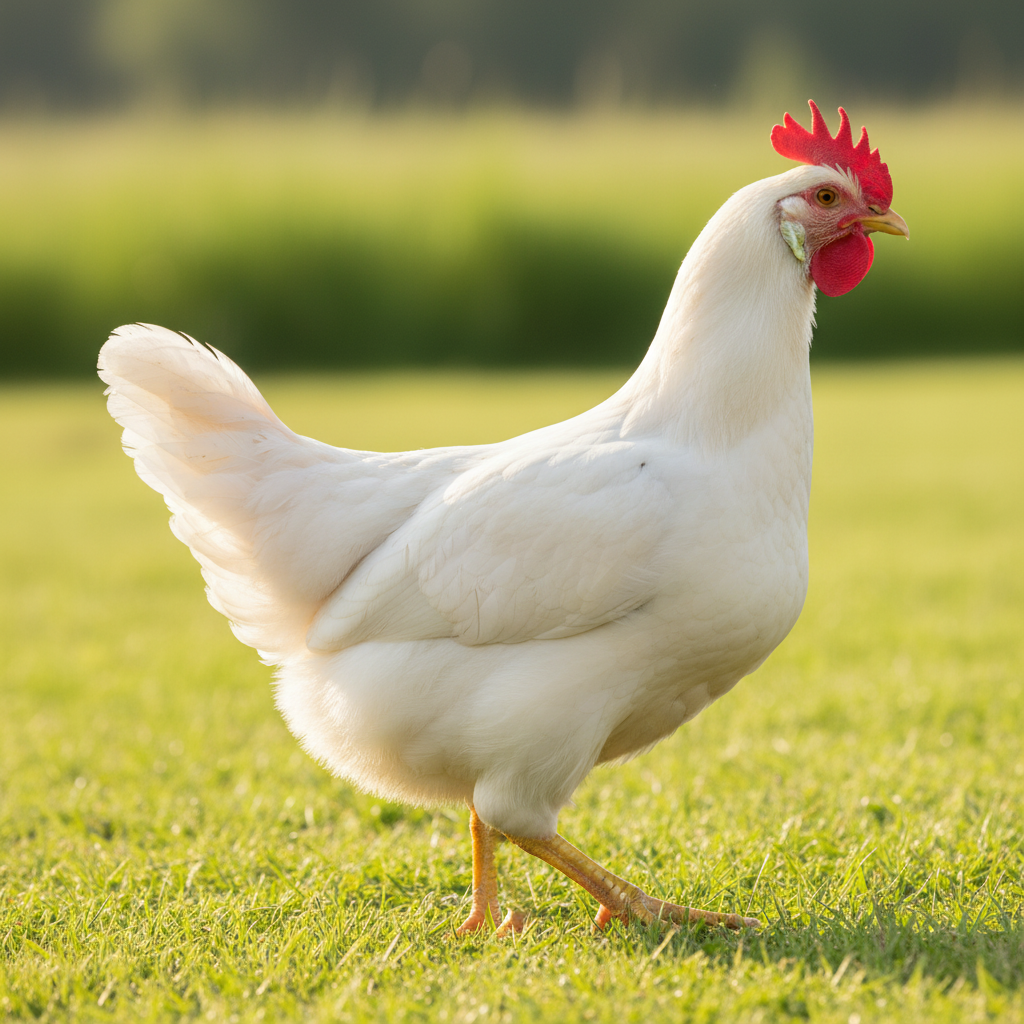
Leghorn
Also known as White Leghorn
Also known as: White Leghorn
Is the Leghorn right for you? Take the Breed Matcher →About the Leghorn
Leghorns are sleek, active birds known for their white feathers and prominent, upright tails. They have a friendly yet skittish temperament, making them better suited for experienced keepers. This breed is distinctive for its exceptional egg-laying capabilities, producing white eggs efficiently throughout the year.
History
The Leghorn originated in Italy, specifically from the Livorno area, and gained popularity in the 1800s for its prolific egg production. It was imported to the United States in the 19th century, where it became the foundation of modern commercial egg production.
Care tips
Leghorns thrive in a free-range environment and require ample space to roam and forage. They are hardy birds that can tolerate various climates but may be less friendly than other breeds. Regular access to calcium-rich layers and protection from extreme weather is advised.
Color varieties
Fun facts
- Leghorns can lay up to 300 eggs per year.
- They are known for their high feed-to-egg production efficiency.
- This breed is often used in commercial egg farms worldwide.
- Leghorns have a very alert nature, making them good foragers.
What keeping Leghorns is really like
Leghorns are the breed behind most white eggs sold in stores, and that tells you what they were built for. They came from Italy, named after the port of Livorno, and were refined in the US and Britain into lean, efficient layers. In the backyard they give you a lot of white eggs from a small, light bird that eats less than the heavy breeds.
What they do not give you is a lap chicken. Most Leghorns are alert, quick and nervous around people. They run when you walk in, they are hard to catch, and many are loud, especially when something startles them. Some keepers love that busy energy. Others find it stressful. If you want birds your kids can carry around, look elsewhere.
Laying through the seasons
Good Leghorn strains often start laying earlier than heavy breeds and keep a strong pace through their first couple of years. They are rarely broody, so they do not take weeks off to sit on eggs. Production drops during the fall molt and slows with shorter days like any breed. After the second or third year you will notice fewer eggs, though many hens keep laying at a lower rate for years. Because they put so much into eggs, keep oyster shell available and feed a proper layer ration.
Space and fencing
Leghorns are small but they need room to move. A cramped Leghorn flock is more likely to peck each other. They forage well and do best with a good run or free range time. They also fly. A four foot fence will not hold most of them, so plan on a covered run, a tall fence, or clipping one wing. They tend to roost high if you let them.
Combs, heat and cold
The big single comb is the breed's weak spot in winter. Roosters' combs and hens' floppy combs are prone to frostbite in hard cold, so keep the coop dry and well ventilated. Rose comb Leghorns exist and handle cold better. In heat, Leghorns are excellent. That big comb helps shed heat, and their light build suits hot climates well.
Hatchery Leghorns vs show Leghorns
Most backyard Leghorns come from hatcheries and are bred for laying. Show strains, especially in the US, can be bigger birds with larger combs and often lay less. If eggs are the goal, hatchery or production stock is usually the better choice. If you want a specific color like brown, buff or exchequer, you may need a breeder. The white variety has its own page at White Leghorn.
How they compare
Next to a Rhode Island Red, the Leghorn lays white eggs instead of brown, eats less, and is far more flighty. The Leghorn vs Rhode Island Red comparison covers that matchup in detail. The Ancona is a close cousin with a similar build and laying style, in a mottled black and white coat.
Where to get them
White Leghorns are one of the easiest breeds to buy. Nearly every US hatchery sells them, often as sexed pullets. Brown and other colors are widely available too. Exhibition lines come from breeders you can meet at poultry shows.
Common questions about Leghorns
How many eggs does a Leghorn lay?
Good laying strains are among the best layers you can keep, often laying most days in their first year. Show strains lay less.
Are Leghorns friendly?
Some become tame with daily handling, but most stay wary and quick. They are better suited to keepers who mainly want eggs.
Can Leghorns live in a cold climate?
Yes, but watch the combs. Dry, well ventilated housing helps prevent frostbite, and rose comb birds are the safer pick for very cold winters.
