

Frostbite
Cold and humidity damage exposed tissue. Tips of large combs and wattles go black or gray. Wet bedding plus cold makes it much worse than dry cold alone.
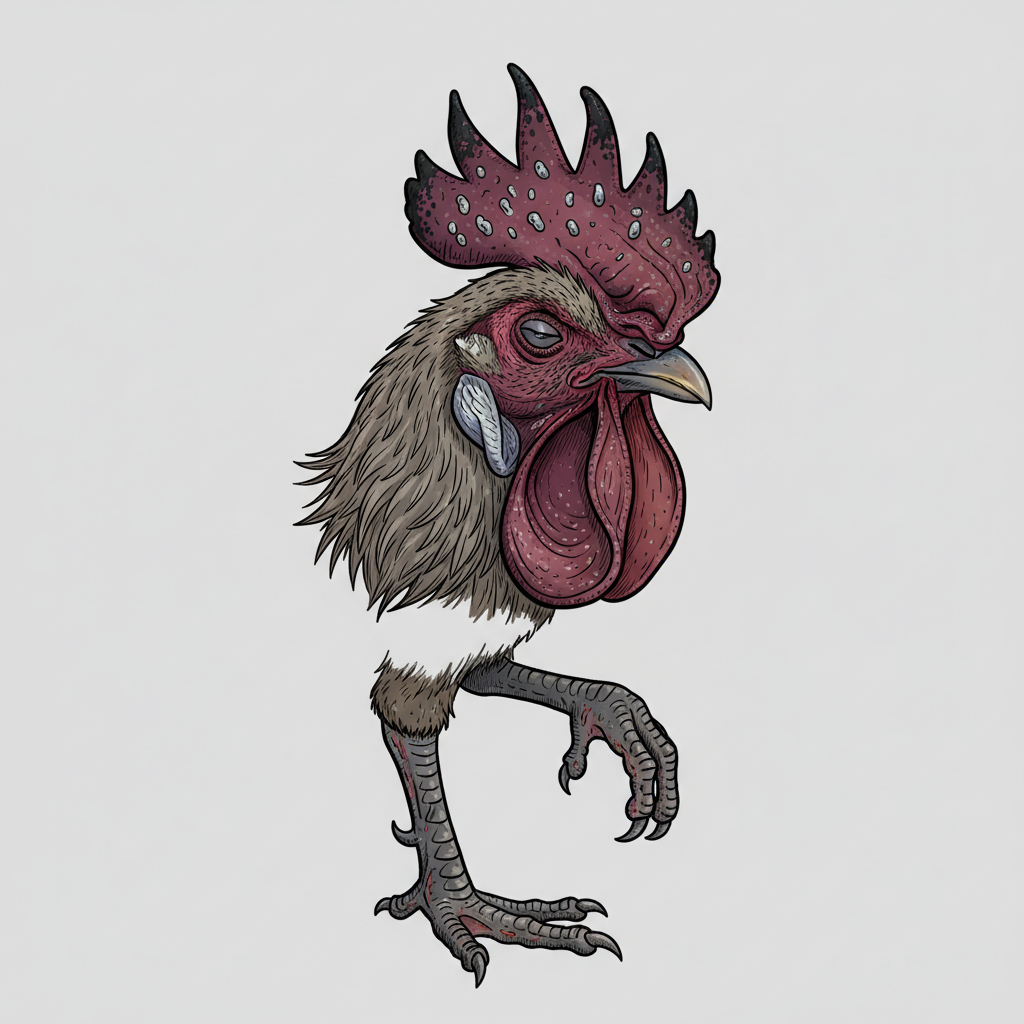
Mix of AI illustrations and anonymized real cases shared by community keepers. Visual severity varies by bird, age, and stage.
Symptoms
- Black or gray tips on comb or wattles
- Swollen comb or wattles
- Blisters on comb
- Limping / leg weakness
- Dark or peeling toes
Treatment
Move the bird somewhere warm but do not rub or rapidly warm frozen tissue. Apply petroleum jelly or a non irritating balm. Damaged tips often fall off, that is normal. Keep watch for infection. A vet visit is wise if feet are badly affected.
Prevention
Ventilate the coop well but block drafts at roost level. Dry bedding is more important than insulation. Apply petroleum jelly to large combs before deep cold snaps. Provide a wide flat roost so feet stay covered.
Treating frostbite and stopping it next winter
Frostbite happens when tissue freezes. In chickens it shows up most on large single combs, wattles and toes. Cold alone is only part of the story. Damp air inside the coop is often the bigger cause, because wet tissue freezes faster. A bird with frostbite needs gentle care, and the coop usually needs a change.
Signs of frostbite
- Pale, gray or white tips on the comb or wattles at first.
- Swelling and blisters over the next day or two.
- Tips that turn dark or black over days to weeks.
- Limping or reluctance to walk if toes are affected.
What to do right now
- Bring the bird somewhere cool but above freezing. Do not take her straight into a hot house.
- Warm the area slowly. Lukewarm water on the feet, or a lukewarm damp cloth on the comb, works. Never use hot water, a hair dryer or direct heat.
- Do not rub or massage frostbitten tissue. It damages it further.
- Pat dry and keep her in a calm, dry space.
- Leave blisters and dark tissue alone. Do not cut them off.
Over the next few weeks
Dead tissue usually dries up and falls away on its own. The comb or toes may end up shorter. Watch for signs of infection like swelling, heat, a bad smell or pus. Keep her separate if others are pecking the dark tissue.
How to tell this apart from look-alikes
Black spots on a comb in summer are more likely dry fowl pox. A purple or blue comb across many birds, especially with deaths, is not frostbite. That can be a sign of avian influenza and should be reported to your state veterinarian.
When to call a vet
Call an avian or poultry vet if toes or feet are badly affected, if there are signs of infection, or if she stops eating. Severe foot frostbite can affect her ability to walk and may need more than home care.
Prevention
- Ventilation is the big one. Moist air from breath and droppings needs to escape. Vents up high, out of drafts at roost level, help. The coop ventilation guide explains it.
- Remove wet bedding and keep waterers out of the coop at night if you can.
- Use wide, flat roosts so birds cover their toes with their feathers while sleeping.
- Pick breeds with small combs if you live somewhere very cold.
- Do not seal the coop airtight to keep it warm. That traps moisture.
The cold weather care page has more winter tips.
The flock and the eggs
Frostbite is not contagious. If one bird got it, others with big combs may be at risk too, so check the flock. Eggs from a frostbitten hen are fine to eat. Laying may drop for a while from the stress.
Common questions about frostbite in chickens
At what temperature do chickens get frostbite?
There is no single number. Damp air and wind make frostbite more likely even on mildly freezing nights.
Should I put petroleum jelly on combs?
Some keepers do, but evidence that it prevents frostbite is weak. Dry air and good ventilation matter more.
Will a frostbitten comb grow back?
No. Lost tissue does not regrow, but the bird usually heals well.
