

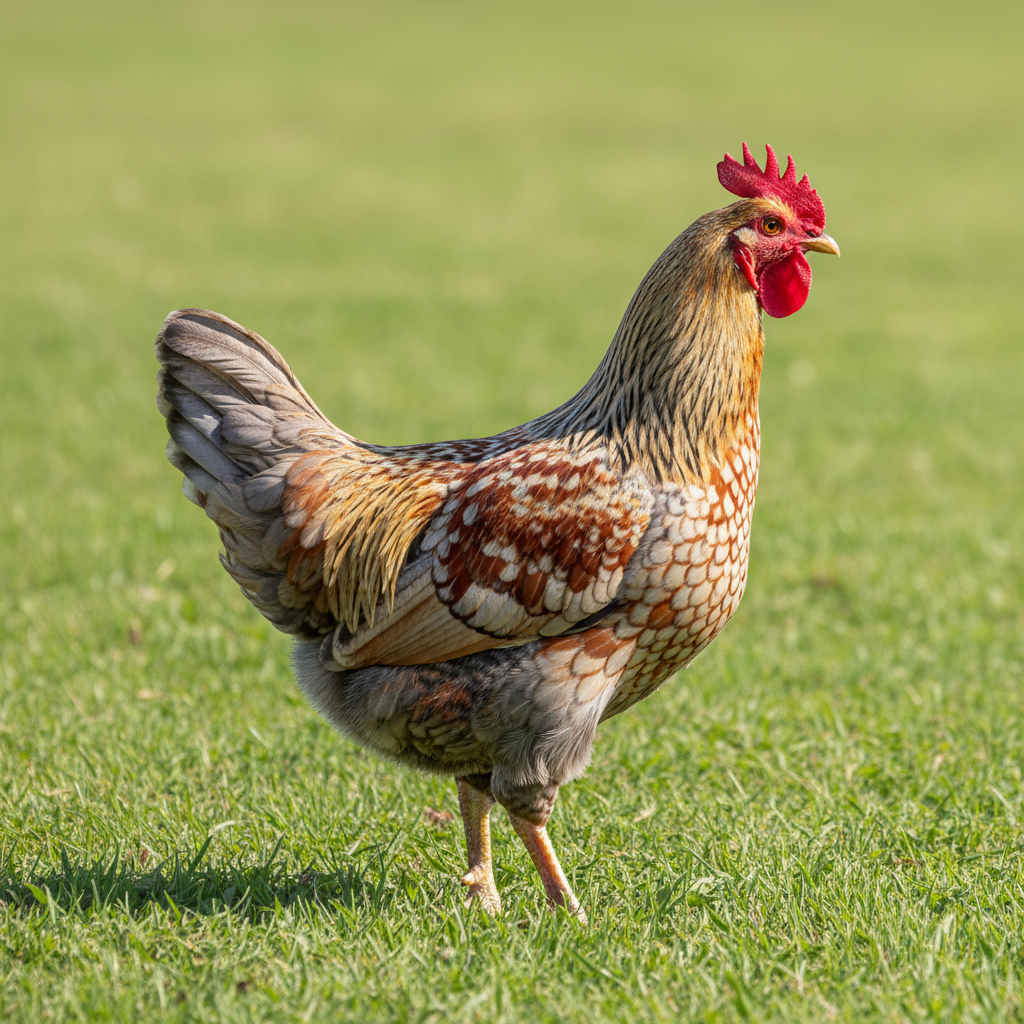
Crele Standard Old English
The Crele Standard Old English is a striking ornamental breed known for its unique plumage.
Is the Crele Standard Old English right for you? Take the Breed Matcher →About the Crele Standard Old English
The Crele Standard Old English displays a distinctive crele pattern, characterized by rich, warm tones of red and black. Their feathering is closely set, giving them a compact appearance. This breed is known for its spirited personality, often being active and curious, which makes them a lively addition to the backyard flock. With a proud stance and a bold demeanor, they capture attention in any setting.
History
The Crele Standard Old English is believed to have developed in England, though its specific origins are unclear. It was bred for both utility and exhibition, becoming a favorite among poultry enthusiasts. The breed has seen various adaptations over time, leading to its recognition in poultry shows and competitions.
Care tips
Crele Standard Old English chickens prefer a spacious environment that allows for their active nature. While they can be somewhat broody, they are generally not as dedicated as other breeds. Providing adequate shelter and a secure run will help keep them healthy and happy. Special attention should be given to their feather quality to prevent any issues related to their unique plumage.
Fun facts
- Crele refers to their unique feather pattern combining red and black.
- This breed is known for its lively and friendly temperament.
- Crele Standard Old English can be quite vocal and engaging.
- They are often seen in poultry shows due to their striking appearance.
What makes a Crele different
Crele is a barred version of the red-based game colors. Take a Black Breasted Red and add the barring gene, and you get a Crele. Roosters show barred hackles and saddles in orange to straw tones over a barred body, so the bright red and black of a Black Breasted Red softens into stripes. Hens are barred too, often with a salmon tone in the breast.
The barring gene is sex-linked, and males usually carry two copies while females carry one. That is why Crele roosters often look lighter and more washed out than the hens.
Relationship to Old English Game
This is a color of large fowl Old English Game, often sold as "Standard Old English." Body type, behavior and care are the same as any Old English.
- Lively, alert foragers that do well free ranging.
- Strong fliers. Expect them on fence tops if the run is open.
- Eggs are small and cream to tinted, and most come in spring and summer.
- Broody hens that are very protective of chicks.
Keeping Creles
Roosters fight other roosters, which is the biggest management point with any game breed. Keep one rooster per group or house males separately. In winter, give a dry coop with good ventilation, since tight feathers hold less warmth. Single combs can frostbite in deep cold. Heat is less of a problem with shade and water.
Crele is also a known pattern in other breeds. The Bielefelder, for example, uses a crele-type pattern for autosexing, though it is a very different, heavy bird.
Where to find them
Creles are fairly popular with game fanciers. Some hatcheries offer them in large fowl, and they show up at poultry shows.
Common questions about Crele Old English
Why do Crele roosters look lighter than hens?
Roosters usually carry two copies of the barring gene, which lightens their color more.
Is Crele a separate breed?
No. It is a color pattern within Old English Game and some other breeds.
Are Crele hens good mothers?
Yes. Like other Old English hens, they go broody often.
