

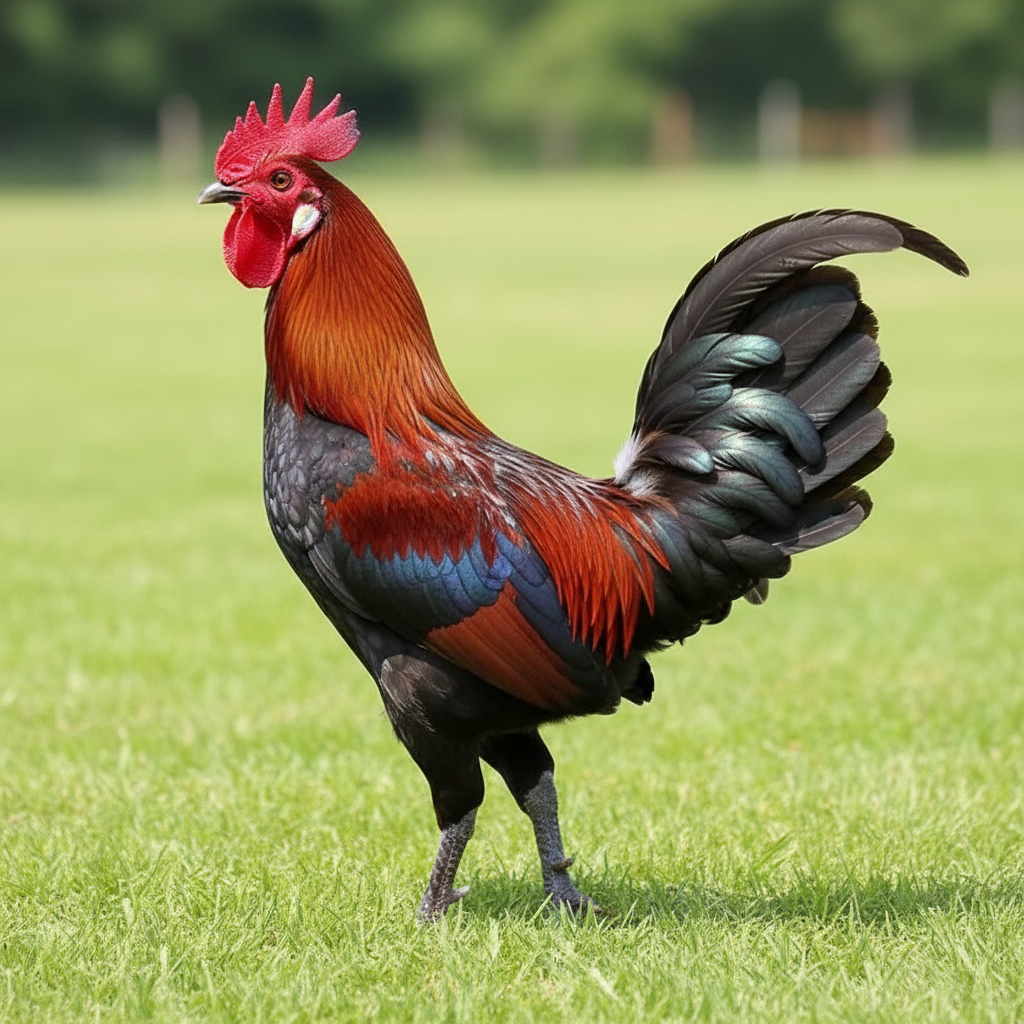
Black Breasted Red Standard Old English
The Black Breasted Red Standard Old English is a striking breed known for its vibrant plumage and spirited personality.
Is the Black Breasted Red Standard Old English right for you? Take the Breed Matcher →About the Black Breasted Red Standard Old English
This breed features a stunning black-breasted plumage coupled with rich red feathers on its body. Known for their alert nature, they are often quite friendly and curious, making them suitable for backyard flocks. Their compact build and well-defined features contribute to their distinctive appearance. These chickens are also recognized for their active temperament and need for space to forage.
History
The Old English game breeds, including the Black Breasted Red, have been developed over centuries in England, originally for cockfighting. With the decline of that sport, these chickens transitioned to ornamental and exhibition use, gaining popularity among backyard keepers and hobbyists around the world.
Care tips
Provide plenty of space for them to roam, as they are active birds that enjoy foraging. Monitor for possible tendencies toward broodiness, which can be common in some individuals. Their hardy nature makes them suitable for various climates, but shelter from extreme weather is advisable. Regular engagement will help prevent boredom and maintain their friendly demeanor.
Fun facts
- Their striking colors make them popular in poultry shows and exhibitions.
- The breed’s history is closely tied to the sport of cockfighting, making them spirited.
- They retain many traits from their game fowl ancestors, including agility and curiosity.
- Black Breasted Red Standard Old English chickens can be quite vocal, adding charm to any flock.
The classic Black Breasted Red
Black Breasted Red is the most familiar color in Old English Game, and it is the picture most people have of a fighting rooster from old paintings. The rooster has bright red to orange hackles and saddle feathers, deep red shoulders, a black breast and a black tail. Hens are brown with fine stippling and a salmon breast.
Why this color is so common
This pattern is close to the wild type, so it shows up easily and has been kept for centuries. It is often the first color a hatchery lists under "Standard Old English," which is the large fowl version of the breed. It is usually the easiest Old English color to find.
What daily life looks like
- Alert birds that forage well.
- Small cream to tinted eggs in modest numbers.
- Hens often go broody and raise chicks without help.
- Strong fliers, so clip wings or cover the run if you need to keep them in.
The game background shows up most in roosters. Males fight each other and may fight to serious injury, so one rooster per group is the standard advice. Hens are generally manageable, and many become tame with regular handling.
Climate notes
Hard, tight feathering sheds water well but traps less heat, so a dry coop matters more than extra heat. Single combs can be nipped by frost in very cold climates. They handle hot summers well when they have shade.
Similar colors
The Crele is basically a barred version of this color. The Jungle Fowl listing is a strain aimed at the wild look.
Common questions about Black Breasted Red Old English
Why do the hens look so different from the roosters?
Hens carry a brown, camouflaged version of the pattern, while roosters show the bright red and black.
Are Black Breasted Red Old English good layers?
No. They lay a modest number of small eggs.
Are the roosters aggressive?
They are usually aggressive with other roosters. Temperament with people varies by bird and line.
