

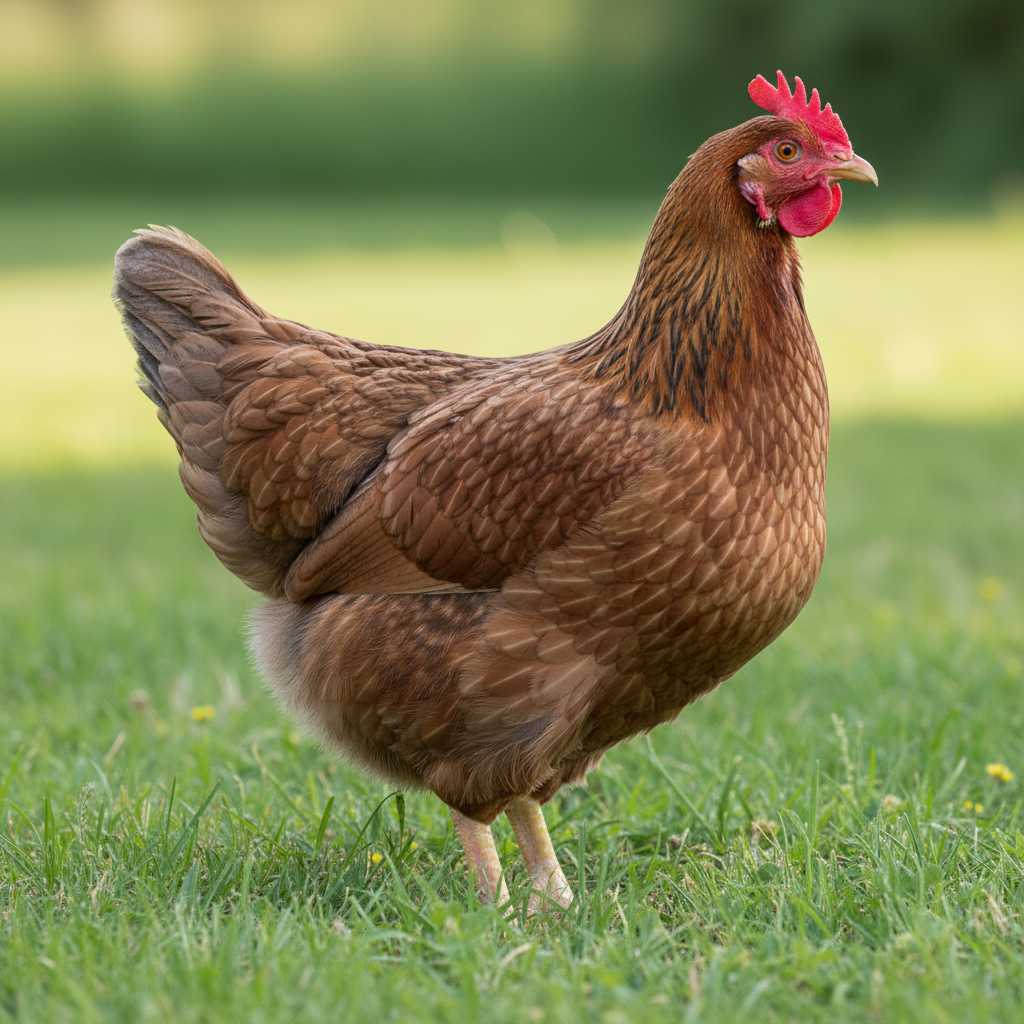
About the Bielefelder
Bielefelders are large, robust birds known for their striking plumage, which can range from reddish-brown to striped patterns. Their calm and friendly temperament makes them great for backyard flocks. A distinctive feature is their auto-sexing ability, allowing for easier identification of male and female chicks. Overall, they are dual-purpose birds, valued for both meat and egg production.
History
Developed in the 1970s in Germany, Bielefelders were created by crossing several breeds, including the Brahma and the Wyandotte. They were designed to be auto-sexing and became popular among backyard poultry enthusiasts. This breed has since spread throughout Europe and into other regions, gaining a reputation for their hardiness.
Care tips
Bielefelders are hardy birds that adapt well to various climates, although they prefer a spacious environment to roam. They are not known for being broody and are generally low-maintenance. Ensure they have ample access to food, water, and shelter, as their size can make them more susceptible to heat stress in warmer climates.
Color varieties
Fun facts
- Bielefelders can lay around 200 medium-sized eggs per year.
- They are known for their friendly and docile nature, making them ideal for families.
- Chicks are auto-sexing, meaning males and females can be identified at hatching.
- Despite their size, Bielefelders are active foragers and enjoy free-ranging.
What Bielefelders are like to keep
The Bielefelder is a modern German breed developed in the 1970s around Bielefeld by breeder Gerd Roth. It is large, calm and autosexing, which means chicks can be sexed by down color at hatch, and that keeps working generation after generation. Its full German name is Bielefelder Kennhuhn.
Adult hens show a barred, crele-type pattern with gold and salmon tones. Roosters are big, showy birds with orange and barred feathers. Most Bielefelders are gentle and easy to handle, and many keepers describe them as friendly.
Who they suit
- Keepers who hatch their own chicks and want to know which are hens.
- Families who want a calm, large bird.
- Cold climate keepers.
They are less ideal for very small coops because of their size, and they cost more than hatchery breeds.
Laying pattern
Bielefelders are good layers of large brown eggs. Like other heavy breeds, they can take a while to start. They lay best in spring and summer and slow in winter and during the molt. Some hens go broody.
Sexing chicks
Female chicks generally have darker down with clear chipmunk-style stripes. Male chicks are generally lighter, with fuzzier markings and often a light spot on the head. Compare chicks side by side, as differences are clearer that way.
Space and climate
Give them generous space, low roosts and large nest boxes. They handle cold well. Their single comb can get frostbite in harsh winters, so keep the coop dry and ventilated. In heat, they need shade and water like any heavy breed.
Compared with similar breeds
The Cream Legbar is another autosexing breed, lighter and crested, laying blue eggs. If you mainly want easy sexing for a laying flock, a hybrid like the Black Sex Link works too, but it will not breed true.
Where to buy
Bielefelders are uncommon but growing in the US. Breeders and a few hatcheries sell chicks and hatching eggs.
Common questions about Bielefelders
Are Bielefelders friendly?
Most are calm and gentle.
How big do Bielefelders get?
They are a large breed, with roosters noticeably bigger than hens.
Do Bielefelders lay well?
Yes. They are good layers of large brown eggs.
