

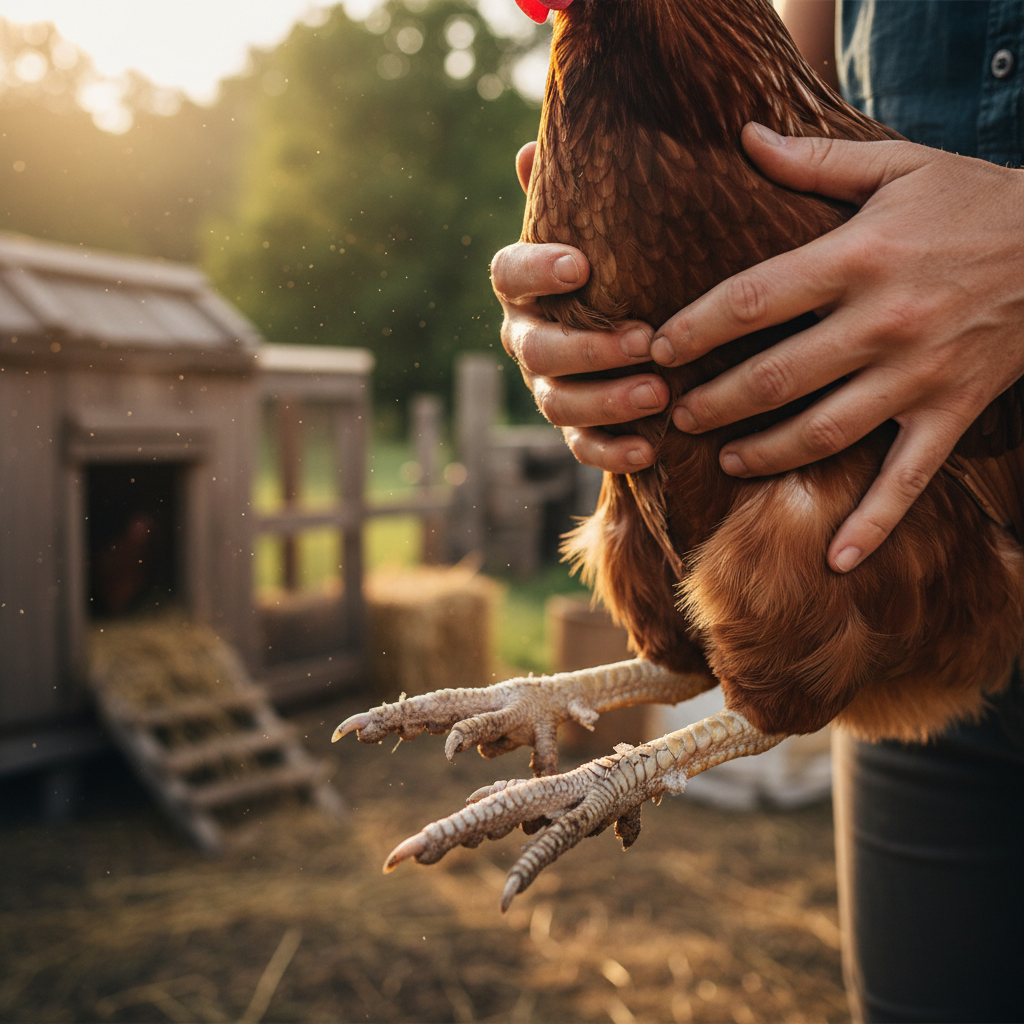
Scaly leg mites in chickens
Scaly leg mites burrow under the leg scales, causing raised, white, crusty buildup. Treatable at home, but you need to be consistent.
Diagnose your chicken in 30 seconds
Upload a photo + describe symptoms. Our AI vet returns likely causes, urgency, and home care.
Open AI Chicken DoctorMost likely causes
1. Knemidocoptes mutans mite
The microscopic mite that burrows under leg scales. Spreads bird-to-bird and via perches.
2. Older or immunocompromised birds
Older hens and stressed birds are more susceptible.
3. Dirty or overcrowded coop
Built-up droppings and shared perches accelerate spread.
What to check first
- Are leg scales raised, lifting, or crusty white instead of flat and smooth?
- Is the hen limping or scratching at her legs?
- Are roosters affected (often hit first because of larger scales)?
- Other birds in the flock showing early signs?
Home care that works
- Coat the legs in petroleum jelly (Vaseline) twice a week for 3-4 weeks, smothers the mites.
- Alternatively, dip legs in warm cooking oil weekly.
- Treat all flock members at once, even ones who look fine.
- Clean the coop thoroughly; treat perches with permethrin.
- Scales will look bad for weeks even after mites are dead, they regrow at the next molt.
Call a vet if
- Severe limping or refusal to walk.
- No improvement in 6 weeks of treatment.
- Open sores or bleeding on the legs.
Frequently asked questions
How long until scaly leg mites are gone?
Mites are usually dead in 3-4 weeks of consistent treatment, but the damaged scales take 6-12 months to fully regrow.
Can I use WD-40 on scaly leg mites?
No, never use solvents or industrial products on chicken legs. Petroleum jelly or food-grade oil only.
Related symptoms
Dealing with scaly leg mites step by step
Scaly leg mites are tiny mites that burrow under the scales on a chicken's legs and feet. The scales lift, thicken and crust over, and the legs can look rough, chalky or swollen. It is slow, it is uncomfortable for the bird, and left alone it can cause lameness. The good news is that it is very manageable once you spot it.
What to do right now
- Check every bird. Scaly leg mites spread on roosts and by contact, so if one bird has them, others may too.
- Compare legs side by side. Healthy scales lie flat and smooth. Affected scales stick up and may have white crusty material under them.
- Separate badly affected birds if they are limping or have open sores.
- Do not pick or pull off scales. That can make the legs bleed and invite infection.
- Start treatment for the whole flock, not just the worst bird.
Treatment options
Many keepers coat the legs with petroleum jelly or a plant oil to smother the mites, repeating every few days for several weeks. This can help, but it is slow and has to be kept up. There are also products labeled for mites on poultry. Use only products whose label covers chickens, follow the directions exactly, and ask a vet if you are unsure. The old scales will not smooth out right away. They usually look better after the bird molts or grows new scales.
How to tell this apart from other leg problems
Older birds naturally have rougher, thicker scales, but they still lie flat. A swelling on the bottom of the foot with a dark scab is more likely bumblefoot. A bird that is limping with normal looking scales may have an injury or a joint problem, covered on the limping page. Mites and lice on the body are a different problem with different treatment, though it is smart to check for them at the same time.
When to call a vet
Call an avian or poultry vet if the legs are bleeding, swollen and hot, if toes look like they are losing circulation, or if a bird cannot walk or stand. Severe cases can damage joints and toes.
Clean the coop too
- Strip out old bedding and nest material.
- Scrub roost bars, and treat or replace old rough wood that is hard to clean.
- Check new birds' legs before they join the flock, and keep them apart for about a month.
The coop cleaning kit page lists simple tools that make this easier.
Eggs and the rest of the flock
Scaly leg mites do not affect eggs directly, and eggs from birds treated with petroleum jelly on their legs are fine to eat. If you use any insecticide or medicated product, check the product label or ask a vet about whether there is an egg withdrawal period. Scaly leg mites do not live on people.
Common questions about scaly leg mites
How do chickens get scaly leg mites?
From other infected birds, shared roosts and bedding. Wild birds and new flock members are common sources.
How long does it take for scales to look normal?
Weeks to months. The mites can be gone well before the scales smooth out.
Can scaly leg mites kill a chicken?
Rarely on their own, but bad cases can cause lameness, infection and loss of toes.
