

Bumblefoot
A staph infection that enters through a cut or pressure sore on the foot pad. A black scab is the calling card. Easy to treat early, ugly if left.
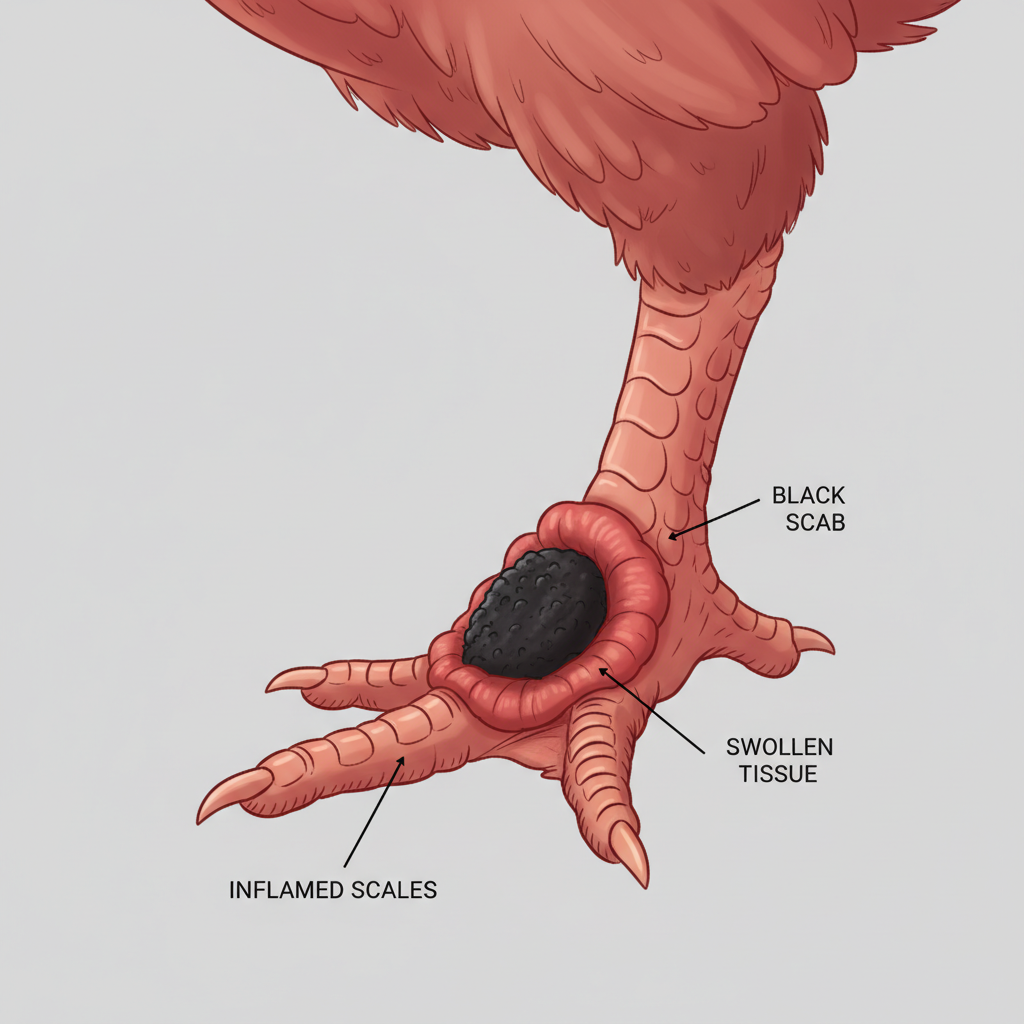
Mix of AI illustrations and anonymized real cases shared by community keepers. Visual severity varies by bird, age, and stage.
Symptoms
- Black scab on foot pad
- Swollen foot or toe
- Limping / leg weakness
- Hot or red foot
- Reluctant to walk
Treatment
Soak the foot in warm Epsom salt for 15 to 20 minutes daily. With clean tools, gently remove the scab and the hard plug underneath. Pack with antibiotic ointment, bandage with vet wrap, and change daily. Severe cases need a vet. Lower the roost height to reduce jump impact.
Prevention
Sand or smooth rough roosts. Keep roost height under 18 inches for heavy breeds. Check feet weekly. Keep the run free of sharp objects.
Typical recovery
10 to 28 days with prompt care.
A practical bumblefoot plan from first scab to full recovery
Bumblefoot is a bacterial infection of the foot, most often caused by staph. It starts when bacteria get into a small cut or a pressure sore on the footpad. The body walls off the infection, which creates a hard core of pus under the skin. That core is why it does not just go away on its own once it is established.
How to check your birds
Pick up each bird and look at the bottom of both feet. Healthy footpads are smooth, even and cool. Early bumblefoot looks like a slightly shiny, red or swollen pad. Later it shows a round, hard swelling with a dark brown or black scab in the center. You may also see a limp, swelling between the toes, or a bird that sits more than usual.
Caring for a mild case
- Bring her in and put her on clean, soft bedding.
- Soak the foot in warm water with Epsom salt to soften the scab and clean it.
- Dry well and apply an animal wound spray or ointment.
- Pad and wrap the foot so pressure is taken off the pad.
- Change the wrap every day or two and watch for change.
Soaks and wraps support healing. They do not kill a deep infection by themselves.
When home care is not enough
If the swelling is large, the core is deep, it is hot or spreading up the leg, or you have tried care for a week or two without improvement, take her to an avian or poultry vet. A vet can remove the core cleanly with pain control and give the right antibiotic if needed. Infection that reaches the bone or tendons is very hard to fix.
How to tell this apart from other foot and leg problems
Crusty, lifted scales along the leg are scaly leg mites, not bumblefoot. A swollen hock or joint without a footpad lesion may be an injury or a joint infection. A limp with healthy-looking feet needs other checks, covered on chicken limping. Frostbitten toes look dark and dry, and show up after cold snaps.
Prevention
- Keep roosts low enough that birds do not land hard. Heavy breeds are most at risk.
- Use wide, smooth roosts with no splinters.
- Keep the run free of wire scraps, sharp stones and glass.
- Keep bedding dry. Wet, dirty floors soften the skin.
- Keep birds at a healthy weight.
The roosts and nests guide has setup tips.
The flock, the eggs and your hands
Bumblefoot does not jump from bird to bird, but if the coop setup caused one case it may cause more. Check everyone's feet. Eggs from a bird with bumblefoot are fine unless she is on medication, in which case check the product label or ask a vet. Wear gloves when you handle the wound, since staph can infect cuts on your hands.
Common questions about bumblefoot
What causes bumblefoot in chickens?
Bacteria getting into a small cut or pressure sore on the footpad, often from hard landings or rough perches.
How long does bumblefoot take to heal?
Mild cases can improve in a couple of weeks. Cases that need surgery take longer.
Can bumblefoot kill a chicken?
It can if the infection spreads deep into the foot or the body. Treat it early.
