

Internal Worms (Roundworms, Capillary, Cecal)
Common internal parasites that steal nutrients and cause weight loss, pale combs, and droppy lay. Most free range flocks have a low level burden, problems start when it gets out of hand.
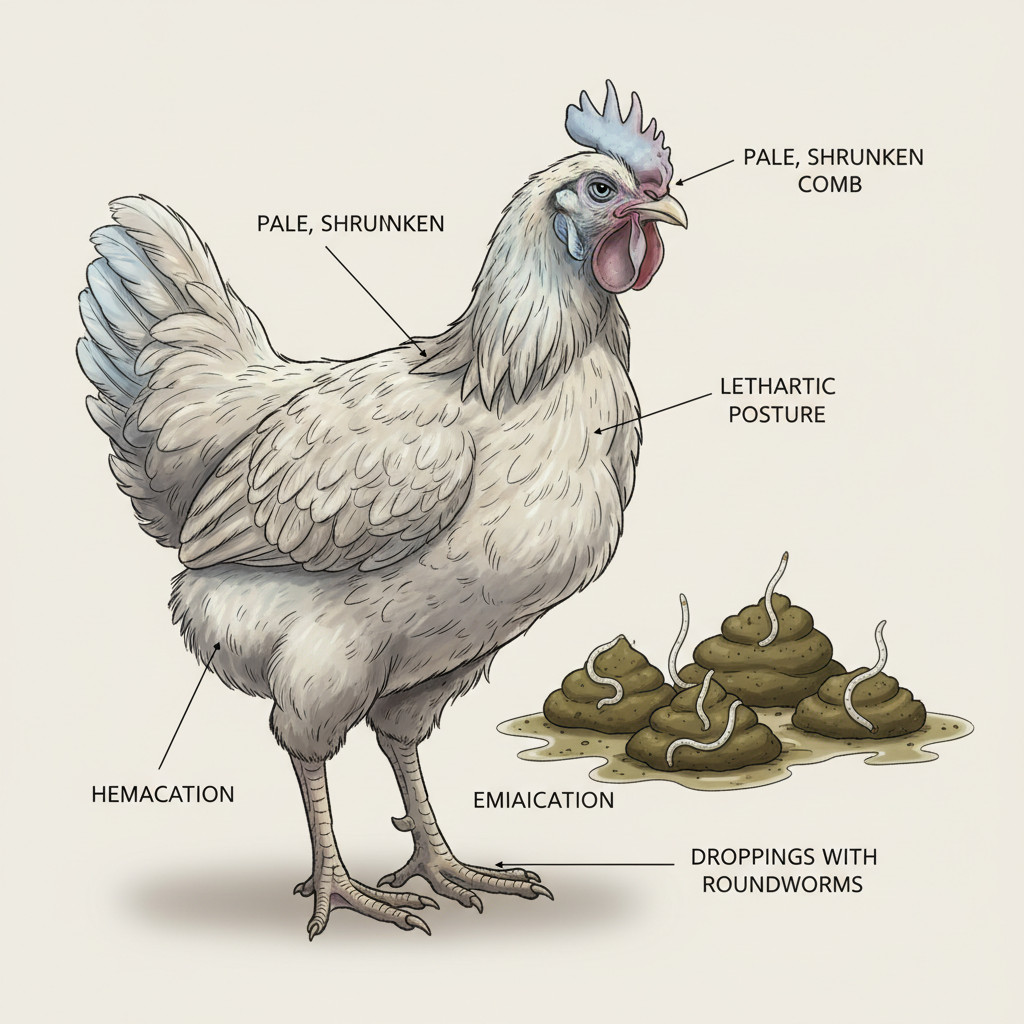
Mix of AI illustrations and anonymized real cases shared by community keepers. Visual severity varies by bird, age, and stage.
Symptoms
- Weight loss
- Pale comb
- Diarrhea
- Drop in egg production
- Visible worms in droppings
- Lethargic / not moving
Treatment
A vet should ideally run a fecal float to confirm the worm type. Common treatments include fenbendazole (Safe-Guard) or levamisole. Follow egg withdrawal periods. Repeat in 10 to 14 days to catch newly hatched worms.
Prevention
Rotate the run if you can. Keep the coop dry. Avoid feeding off the ground in wet weather. A fecal test once or twice a year is worth more than blind deworming.
Typical recovery
7 to 21 days with prompt care.
Checking for worms and treating them the right way
Most chickens that go outside carry some worms. Light loads often cause no obvious harm. Heavy loads steal nutrients, cause weight loss and diarrhea, and can stop laying. Roundworms are the ones you might see in droppings. Capillary worms are tiny and can do a lot of damage without you ever seeing them. Cecal worms are mostly harmless to chickens but can carry blackhead disease, which is deadly to turkeys.
Signs of a heavy worm load
- Weight loss despite eating, and a sharp keel bone.
- Pale comb and wattles.
- Diarrhea, or droppings with visible worms.
- Drop in laying.
- Lethargy and a scruffy look.
What to do
- Get a fecal test. Bring a fresh dropping sample to a vet. It tells you which worms you have and how heavy the load is, which decides what treatment is needed.
- Choose a dewormer that is labeled for poultry and for the worms found. Not every product covers every type.
- Follow the label exactly for how much, how often, and whether to repeat.
- Treat the whole flock at the same time.
- Clean out bedding and rest or rotate run areas if you can.
How to tell this apart from look-alikes
Weight loss and pale combs can also come from mites, coccidiosis or tumors. Check for mites at night and read anemia for more. Bloody droppings in young birds are more likely coccidiosis. Stringy orange tissue in droppings is normal gut lining, not worms. Long white or tan worms in droppings are most likely roundworms.
When to call a vet
Call if birds are losing weight, weak, or dying, or if you are not sure what to use. A vet can recommend the right product and tell you whether it can be used on laying hens.
Herbal and natural dewormers
Garlic, pumpkin seeds and herbal blends are popular, but there is no good evidence they clear a real worm burden. They will not cure an infestation. If you use them, keep doing fecal tests to see what is actually happening.
Prevention
- Keep bedding and runs as dry as you can. Worm eggs survive well in damp soil.
- Rotate runs or give ground a rest if you have the space.
- Raise feeders and waterers so droppings do not get in.
- Run a fecal test a couple of times a year rather than deworming blindly.
- Keep chickens away from turkeys if cecal worms are present.
Eggs and the flock
Many dewormers have egg withdrawal periods, and some are not approved for laying hens at all. Check the product label or ask a vet before eating eggs. Wash your hands after handling droppings. See the common poultry diseases guide for more.
Common questions about worms in chickens
How do I know if my chickens have worms?
A fecal test at a vet is the reliable way. Visible worms in droppings mean a heavy load.
How often should I deworm chickens?
Base it on fecal tests rather than a fixed schedule. Ask a vet for your setup.
Can people get worms from chickens?
The common chicken worms are not considered a risk to people, but wash your hands after handling droppings.
