

Coccidiosis
A protozoal gut infection that destroys intestinal lining. Bloody or mucousy droppings in a young chick are nearly always coccidiosis. Fatal if untreated.
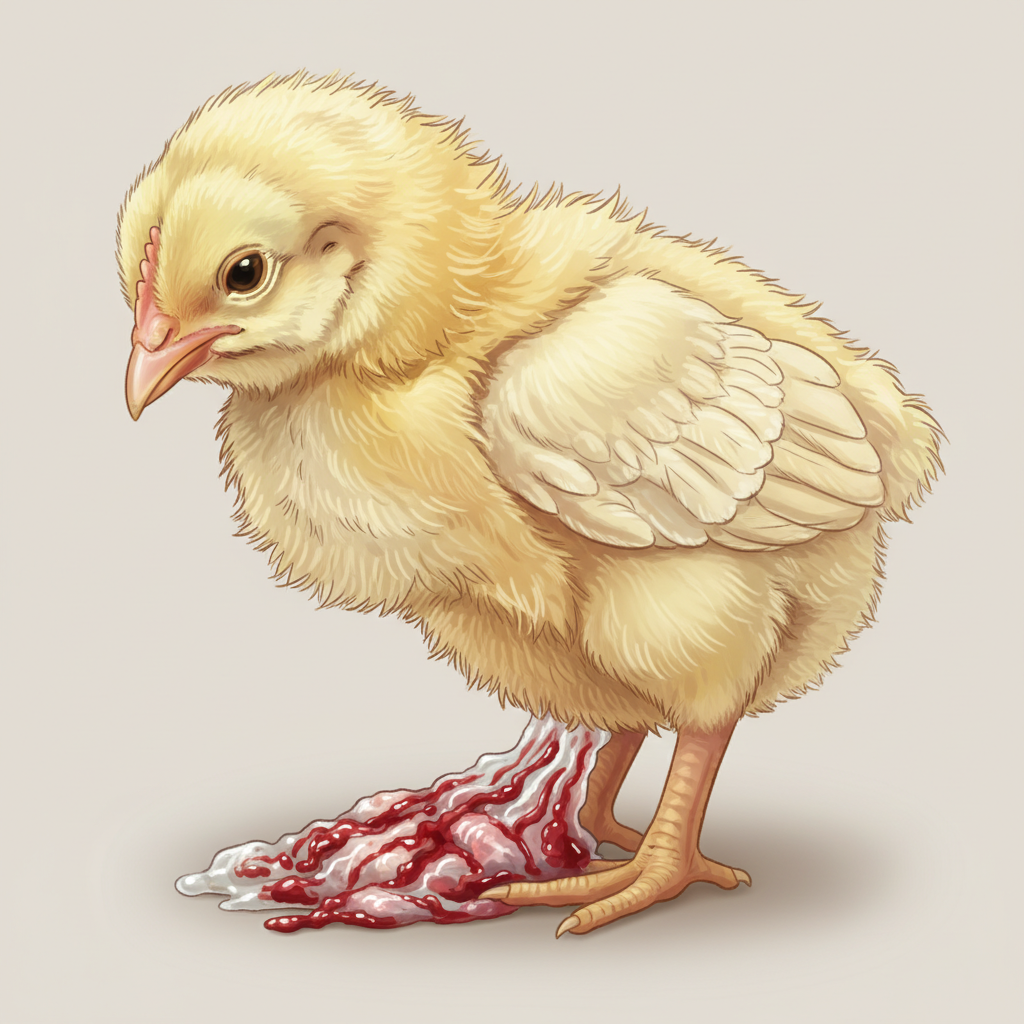
Mix of AI illustrations and anonymized real cases shared by community keepers. Visual severity varies by bird, age, and stage.
Symptoms
- Bloody droppings
- Mucousy droppings
- Lethargic / not moving
- Ruffled feathers
- Pale comb
- Not eating
- Weight loss
Treatment
Treat the whole flock with amprolium (Corid) in the drinking water for 5 to 7 days. Do not give B vitamins during Corid treatment, they cancel it out. Once finished, follow with probiotics and vitamins to rebuild the gut. Move birds to clean dry ground.
Prevention
Keep brooders and runs dry, the parasite needs moisture to thrive. Use medicated chick starter unless you have vaccinated chicks. Clean waterers daily. Rotate runs. Do not overcrowd young birds.
Typical recovery
5 to 10 days with prompt care.
Acting fast when coccidiosis hits
Coccidiosis is caused by tiny parasites called coccidia that damage the lining of the gut. Almost every flock has some coccidia around, and birds slowly build immunity to them. Trouble starts when young birds pick up a big dose, usually from wet, dirty bedding. It can kill chicks in days, so speed matters.
Signs to watch for
- Bloody or mucus-filled droppings, though not every case shows blood.
- Chicks or young birds hunched, fluffed up and sleepy.
- Not eating, but sometimes still drinking.
- Pale comb and skin in older birds.
- Slow growth or weight loss.
What to do right now
- Get a treatment that is labeled for coccidiosis in poultry from a feed store or vet. Follow the label exactly for how much and how long. Treat the whole group, not just the sick ones.
- Pull out all wet and dirty bedding and replace with clean, dry bedding.
- Clean and refill waterers, and raise them so droppings do not get in.
- Separate very weak birds so they can be watched and kept warm.
- Check on the flock several times a day for the next few days.
How to tell this apart from other gut problems
A bit of orange or red stringy tissue in a healthy bird's droppings is normal gut shedding, not coccidiosis. Pasty brown cecal droppings once or twice a day are normal too. Worms can cause weight loss and diarrhea, and a fecal test can tell the difference. Watery green droppings in a bird that is not eating point to other causes, covered on green droppings. The bloody droppings page walks through what red in the droppings can mean.
When to call a vet
Call an avian or poultry vet if birds are dying, if you do not see improvement within a couple of days of starting treatment, or if older birds are getting sick. A vet or state lab can do a fecal test or necropsy to confirm it, since other diseases can look similar.
Prevention
- Keep brooder and coop bedding dry. Wet spots under waterers are the main hot spot.
- Do not overcrowd chicks.
- Medicated chick starter can help chicks build immunity. If your chicks were vaccinated for coccidiosis, ask the hatchery whether to use medicated feed, since some products can work against the vaccine.
- Expose chicks to small amounts of soil from your yard gradually as they grow, rather than all at once.
- Keep new birds apart for about a month before mixing.
The coccidiosis guide has more on prevention.
Eggs, people and the rest of the flock
Chicken coccidia do not infect people, but droppings carry other germs, so wash your hands after cleaning. If you treat laying hens, check the product label or ask a vet about the egg withdrawal period. Older birds that survived often carry some immunity, but new chicks will not.
Common questions about coccidiosis
Can coccidiosis be cured?
Yes, birds often recover with fast treatment from a labeled product and clean, dry bedding.
Can older chickens get coccidiosis?
Yes, especially when stressed, newly moved or exposed to a strain they have not met.
Does apple cider vinegar prevent coccidiosis?
There is no good evidence that it does. Dry bedding and proper treatment are what work.
