

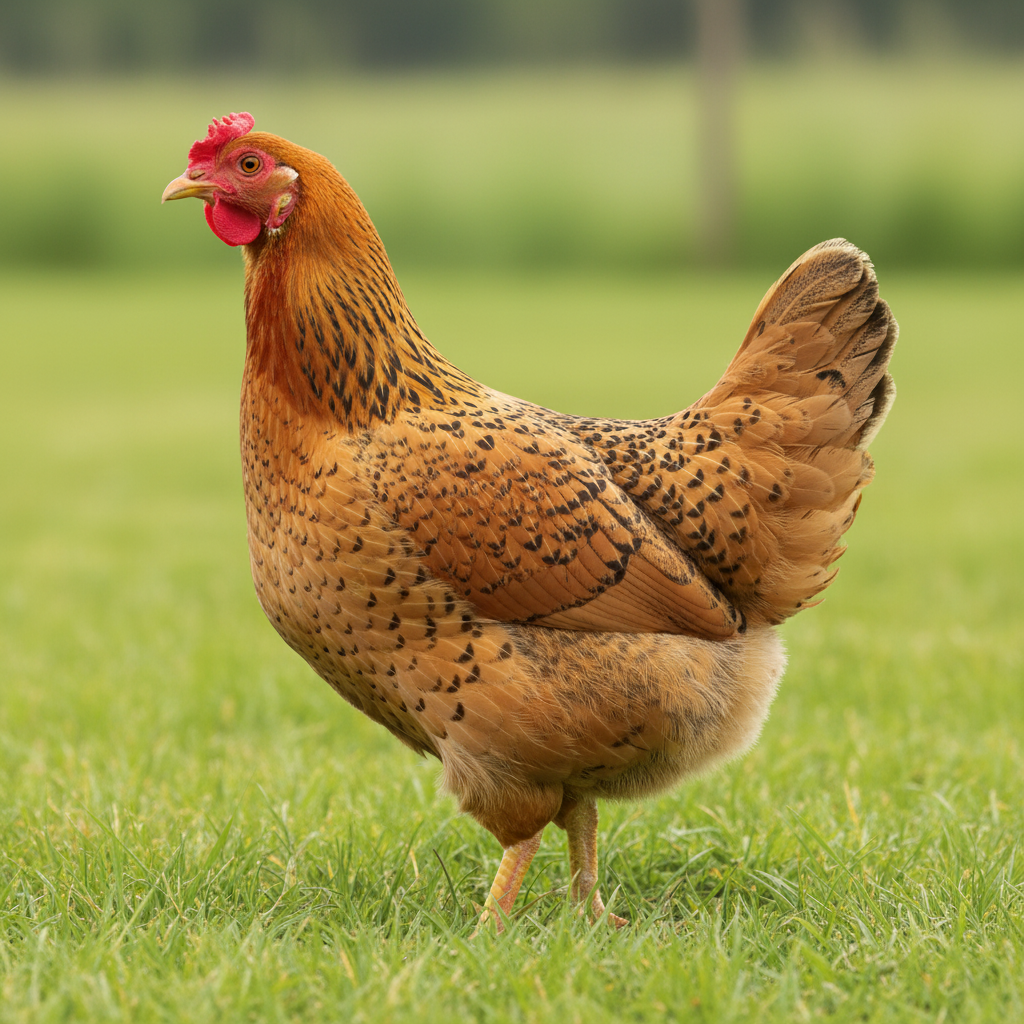
Sicilian Buttercup
Also known as Buttercup
Also known as: Buttercup
Is the Sicilian Buttercup right for you? Take the Breed Matcher →About the Sicilian Buttercup
The Sicilian Buttercup is a striking breed characterized by its unique crown-shaped comb resembling a buttercup flower. Their plumage is usually golden or white with black markings, making them visually appealing. These chickens are generally friendly and active, often curious about their surroundings. Their distinct comb and rustic appearance make them a favorite among backyard enthusiasts.
History
The Sicilian Buttercup originates from Sicily, Italy, where it was developed as an egg-laying breed. It was first recognized in the late 19th century and gained popularity due to its unique comb shape and good egg production. The breed spread to other parts of Europe and has been preserved by enthusiasts for its charm and hardiness.
Care tips
Sicilian Buttercups are hardy birds that adapt well to various climates but prefer ample space to roam and forage. They are known to be relatively broody, making them good mothers if you wish to raise chicks. Regular social interaction is advised, as they thrive on companionship and can become more docile with handling.
Color varieties
Fun facts
- Their unique comb can cause issues in extreme cold due to frostbite.
- Sicilian Buttercups are good layers, producing around 180-200 white eggs annually.
- This breed is adept at foraging, often finding their own food in the yard.
- They are considered to be rare, making them a conservation priority among poultry enthusiasts.
Living with Sicilian Buttercups
The Sicilian Buttercup comes from Sicily and reached the US in the 1800s. Its name comes from its comb, a cup or crown shape with points all around the rim, like a buttercup flower. Hens are a golden buff with rows of black spangles. Roosters are a deeper orange-red with a black tail.
Day to day
Buttercups are light, active and often flighty. They are good foragers and like space. They fly well, so plan on a covered run or tall fence. Many keepers describe them as noisy and quick, not cuddly, though some tame with handling.
Laying
Hens lay small to medium white or lightly tinted eggs. They are not usually broody. Production is fair, best in warm months.
Comb and climate
As a Mediterranean breed, Buttercups handle heat well. Their open, cupped comb can get frostbite in deep cold, so they do better in mild or warm climates. They are on our list of breeds for hot climates.
How they compare
The Leghorn is a similar light Mediterranean layer that lays more eggs and is easier to find. The Buttercup is mostly kept for its unusual comb and pretty plumage.
Rarity
Sicilian Buttercups are uncommon. A few US hatcheries sell them, and some breeders keep them. They have appeared on the Livestock Conservancy priority list.
Who they suit
Buttercups suit keepers in warm areas who want something unusual and do not mind a busy, flighty bird. If you want calm hens for kids, look at a heavier breed instead.
Common questions about Sicilian Buttercups
Why is it called a Buttercup?
For its cup-shaped comb, which looks like a buttercup flower.
Are Sicilian Buttercups good layers?
Fair. They lay white or lightly tinted eggs.
Can Sicilian Buttercups handle cold?
They can with good shelter, but their combs are prone to frostbite.
