

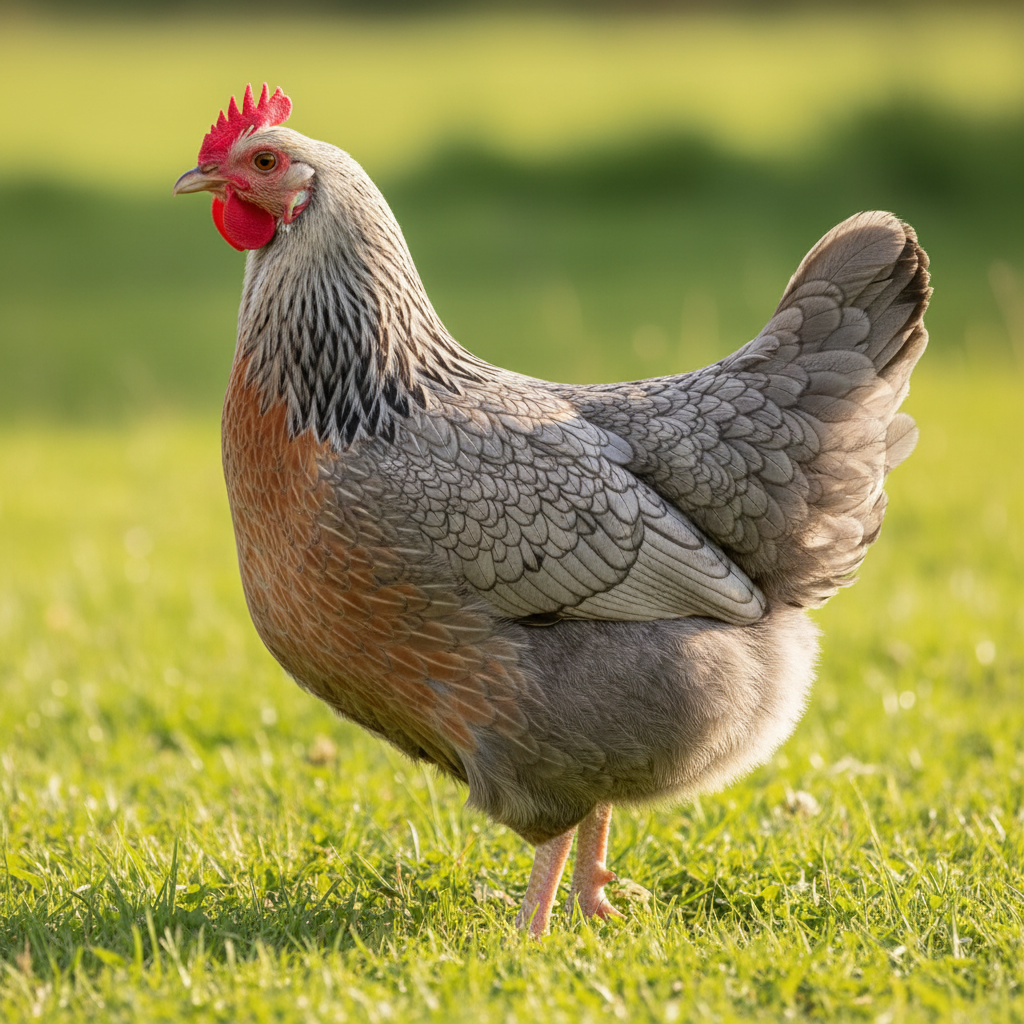
Dorking
Dorkings are known for their distinctive five-toed feet and excellent meat quality.
Is the Dorking right for you? Take the Breed Matcher →About the Dorking
Dorkings are a large breed with a calm demeanor and a characteristic five toes on each foot. Their plumage varies widely, often featuring soft feathers that can be white, red, or gray. These birds are known for their ability to forage and are resilient in various climates. Dorking chickens are also appreciated for their rich flavor and tender meat.
History
Dorkings are believed to have ancient origins, possibly tracing back to Roman times in England. They were developed as a meat breed and became popular for both their quality and distinctive characteristics. Their reputation as a dual-purpose breed has allowed them to sustain interest through the centuries, leading to their presence in various poultry exhibitions.
Care tips
Dorkings are generally hardy but benefit from adequate space to roam and forage. They tend to be broody, making them good mothers if you’re looking to raise chicks. Regular health checks and a balanced diet are important to maintain their condition. Keep them in a clean environment to reduce the risk of disease.
Fun facts
- Dorkings are one of the oldest British breeds and date back over two thousand years.
- Their five toes distinguish them from most other chicken breeds, which only have four.
- Dorkings can adapt well to free-range conditions, thriving on diverse diets.
- These birds were frequently mentioned in literature, highlighting their longstanding popularity.
What Dorkings are like to keep
The Dorking is one of the oldest British breeds and has been linked to Roman Britain, though its early history is hard to pin down. It was developed as a table bird, and it shows. Dorkings have a long, low, rectangular body, short legs and five toes on each foot. Despite their red earlobes, they lay white to lightly tinted eggs.
Dorkings are calm, gentle and easy to handle. They are not fast or flighty, and they do well around families.
Who they suit
- Homesteaders wanting a heritage table bird that also lays.
- Families who want a calm, docile breed.
- Keepers interested in rare, historic breeds.
They are not the best choice for high egg production.
Eggs and broodiness
Dorkings are fair layers of white to tinted eggs. Many hens go broody and are good mothers. They are slow to mature compared with production breeds.
Space and climate
Their short legs and long bodies need room, so do not crowd them. Low roosts help. Dorkings handle mild and cool climates well. Their large single comb, especially in roosters, can get frostbite in harsh cold, so keep the coop dry and ventilated. They do best in a well-drained run, since their low bodies get dirty in mud.
Five toes and foot care
The extra toe is normal. Check feet now and then for injuries or bumblefoot, especially on heavy birds.
Compared with similar breeds
The Faverolles also has five toes and is said to have Dorking in its background. It is fluffier, with a beard and feathered feet. The Sussex is another British table breed, easier to find and a better layer.
Where to buy
Dorkings are a conservation breed. You can find them through a handful of hatcheries and breeders. Silver-gray, red, white and colored are known varieties.
Common questions about Dorkings
Why do Dorkings have five toes?
It is a normal breed trait.
What color eggs do Dorkings lay?
White to lightly tinted, even though they have red earlobes.
Are Dorkings friendly?
Yes. They are known for being calm and gentle.
