

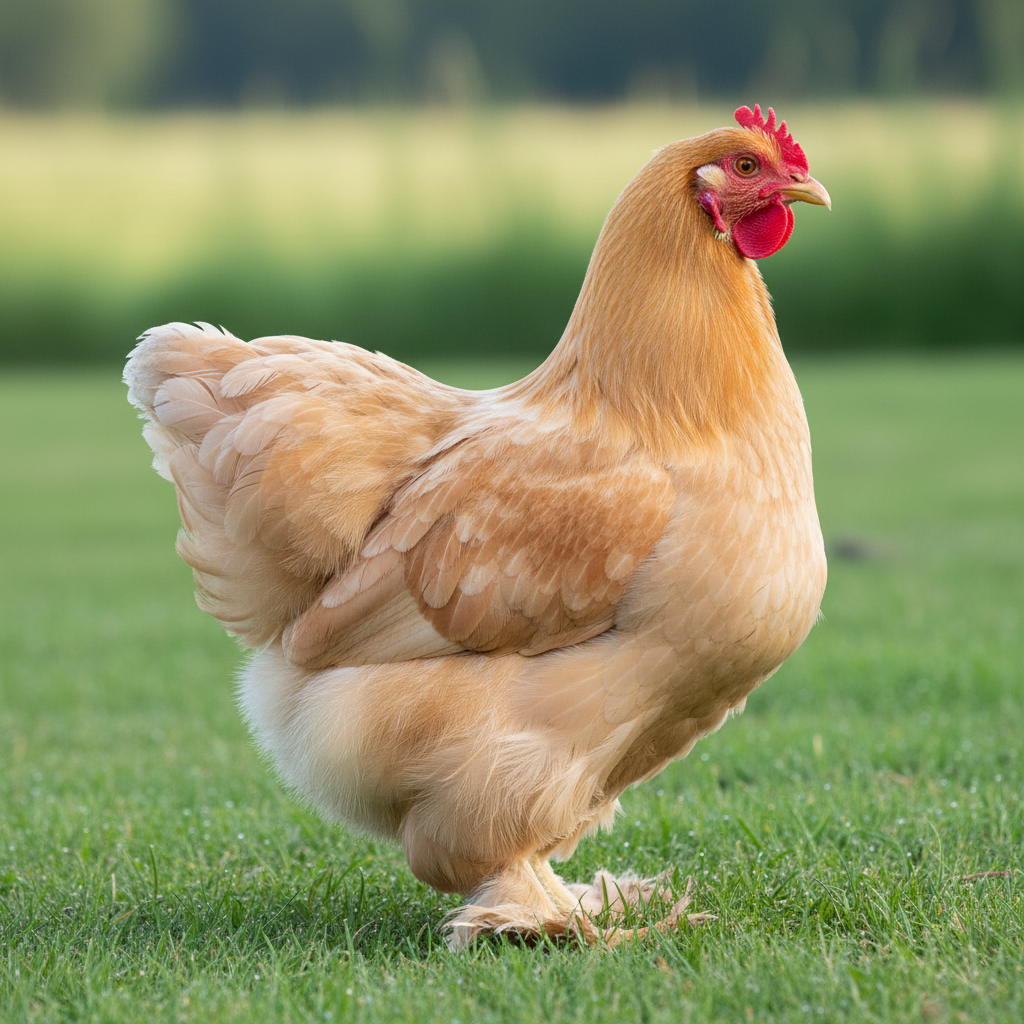
About the Cochin
Cochins are large, round birds covered in abundant soft feathers, giving them a fluffy appearance. Their feathered legs and peaceful demeanor make them a favorite among backyard keepers. Known for being friendly and calm, Cochins are excellent pets and are particularly good around children. They lay medium-sized brown eggs, but their primary appeal lies in their striking looks and gentle nature.
History
Cochins originated in China, specifically in the Shanghai region, and were imported to the United States in the 1840s. Their unique appearance and docile temperament quickly gained popularity, leading to their widespread adoption in ornamental poultry shows. The breed was developed from various native Chinese fowl, and it has since become a staple in backyard coops.
Care tips
Cochins are hardy birds but can be susceptible to heat due to their thick feathering. They thrive in larger spaces since their size can limit mobility, and they enjoy free ranging when possible. This breed is known for being broody, often wanting to hatch eggs or care for chicks, which can be a delightful characteristic for those looking to breed. Regular gentle handling helps maintain their friendly disposition.
Color varieties
Fun facts
- Cochins were one of the first Chinese breeds brought to the US.
- They can weigh between 8 to 11 pounds, making them very substantial.
- The breed is known for its calm demeanor and gentle personality.
- Cochins come in many color varieties, including black, blue, and white.
What it is really like to keep Cochins
Cochins are the big, round, feather-footed chickens that look like walking pillows. They are known for calm, friendly personalities, and many keepers get them as pets more than as egg machines. That is the right mindset going in.
Day to day, Cochins are slow, easy to catch and usually fine being held. They do not range far and are happy in a run. They rarely fly, so they are easy to contain. Because they are so docile, they can end up low in the pecking order in a flock of bossy breeds, so watch them at the feeder.
Who Cochins suit
- Families, kids and anyone who wants a calm pet chicken.
- Keepers who want a reliable broody hen to hatch eggs.
- Cold climates, where their heavy feathering helps.
They are a poor choice if eggs are your main goal, or if your run turns to mud every spring.
Laying and broodiness
Cochins lay a modest number of light to medium brown eggs. Many pullets are slow to start. The bigger factor is broodiness. Cochins go broody often, and a broody hen stops laying for weeks. That makes them great natural mothers, and keepers often use them to hatch eggs from other breeds. If you do not want chicks, you will need to break broodiness now and then. Laying slows in winter and drops more with age.
Space, coop and climate
Standard Cochins are large, so plan on generous coop space, wide doors and larger nest boxes. Low roosts are a good idea since they are heavy and not agile. Bantam Cochins are much smaller and very popular for small yards. They handle cold well, but they can struggle in strong heat because of all that feathering. Shade, airflow and water are essential in summer.
Feathered feet and health quirks
- Foot feathers get caked with mud and droppings. Keep bedding dry and the run well drained.
- Check under foot feathers for scaly leg mites, which can raise and crust the scales.
- Dense, fluffy vent feathers can collect droppings. Some keepers trim them for cleanliness.
- Cochins gain weight easily. Limit rich treats and keep them moving.
- In winter, wet foot feathers can freeze, so look at feet after cold, wet days.
Cochin vs Silkie and Brahma
A Silkie is smaller with fur-like feathers and is even more famous for going broody. The Silkie vs Cochin comparison covers that choice in detail. A Brahma is also big and feather-footed, but is taller, with a pea comb, and usually lays a bit better.
Varieties and where to buy
Cochins come in many colors, including buff, black, blue, partridge, white and frizzled types. Bantam Cochins are especially common. Most hatcheries sell both large and bantam Cochins. Show-quality birds with huge feathering come from breeders and poultry shows.
Common questions about Cochins
Are Cochins good egg layers?
Not really. They lay a modest number of brown eggs and take breaks when they go broody.
How do I stop my Cochin from going broody?
Remove her from the nest often, collect eggs quickly and, if needed, put her in a wire-floored crate with food and water for a few days.
Can Cochins live in hot climates?
They can, but heavy feathering makes heat hard on them. Provide shade, airflow and cool water all summer.
