

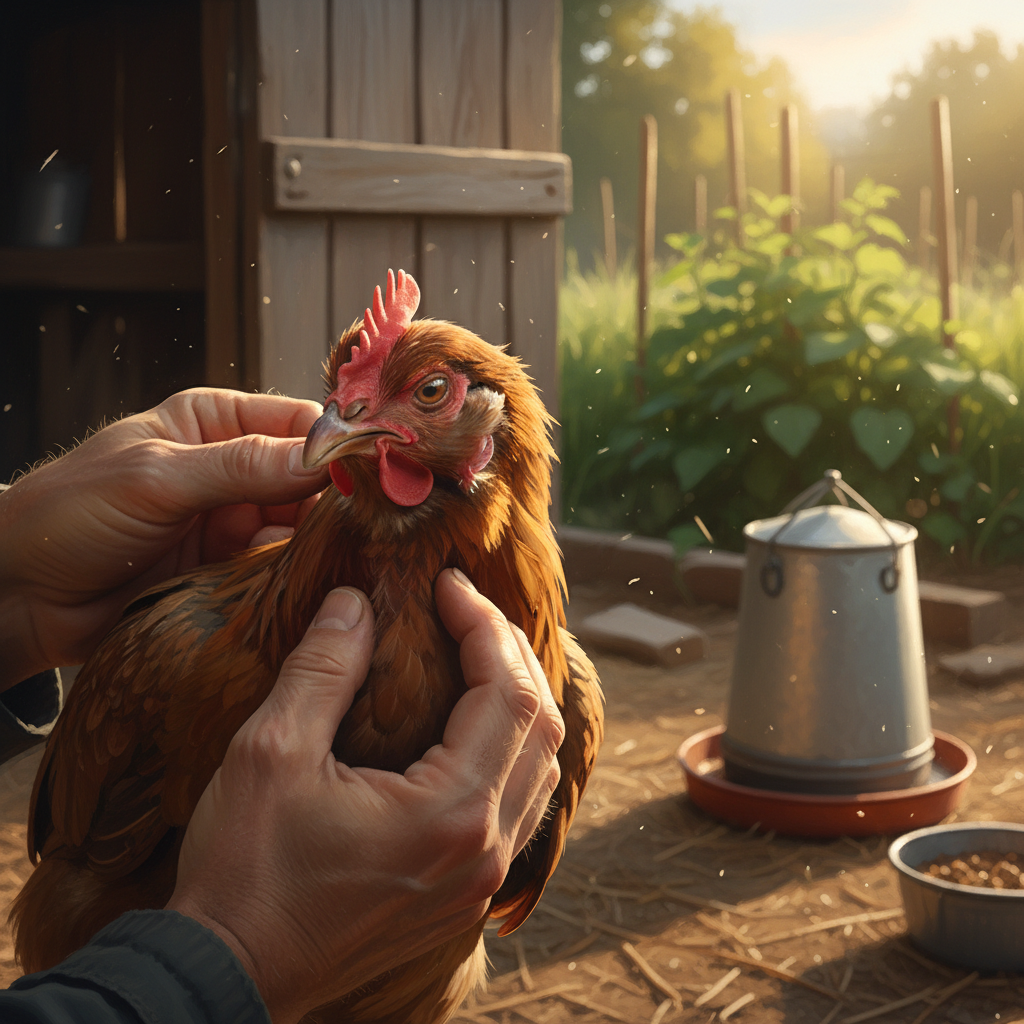
Why is my chicken sneezing?
A single sneeze is normal. Repeated sneezing, especially with watery eyes, head shaking, or rattling breath, almost always means a respiratory infection.
Diagnose your chicken in 30 seconds
Upload a photo + describe symptoms. Our AI vet returns likely causes, urgency, and home care.
Open AI Chicken DoctorMost likely causes
1. Mycoplasma gallisepticum (MG)
The most common cause. Chronic, contagious, often flares under stress or weather changes. Birds become lifelong carriers.
2. Infectious bronchitis
Viral and very contagious. Causes sneezing, drop in egg production, and misshapen eggs.
3. Dust or ammonia irritation
Dusty bedding, dry feed, or ammonia from wet litter irritates the airways and triggers sneezing without true infection.
4. Aspergillosis (fungal)
From moldy feed or damp bedding. Usually causes gasping more than sneezing, but worth ruling out.
5. Mites in the nostrils
Rare but possible, northern fowl mites can crawl onto the face and trigger head-shaking and sneezing.
What to check first
- Are nostrils clear, or crusted/runny?
- Any rattling, wheezing, or open-mouth breathing?
- Watery, foamy, or bubbly eyes?
- Has feed quality changed? Any visible mold?
- Is the coop dusty, damp, or smelly with ammonia?
- How many birds are affected, one, or several?
Home care that works
- Isolate the sneezing bird in a separate dust-free space.
- Improve ventilation without creating a draft, open vents at the top of the coop.
- Swap dusty pine shavings for hemp, large-flake shavings, or sand.
- Add 1 tsp apple cider vinegar per gallon of water (plastic waterers only) for 7 days.
- Boost immunity with electrolytes and vitamins (Sav-A-Chick or Nutri-Drench).
- Clean and disinfect the coop, paying special attention to perches and nest boxes.
Call a vet if
- Sneezing lasts more than 48 hours with no improvement.
- Bird is gasping, open-mouth breathing, or making rattling sounds.
- Swollen face, sinuses, or wattles.
- Multiple birds get sick within a few days.
- Egg production drops sharply or eggs are misshapen.
Frequently asked questions
Can chicken sneezing go away on its own?
Dust or mild irritation often clears within 24-48 hours once you fix ventilation and bedding. True infections (MG, IB) rarely resolve without supportive care and usually become chronic.
Is chicken sneezing contagious to humans?
The main respiratory illnesses of chickens (Mycoplasma, IB, ILT) do not infect humans. Always wash hands after handling sick birds anyway.
What antibiotic do you give a sneezing chicken?
Tylosin and Tylan are commonly used for Mycoplasma, but they're prescription-only in most places. Don't medicate blindly, a vet can confirm the cause with a cheap swab test.
Related symptoms
What to do when a chicken starts sneezing
One sneeze after a dust bath is nothing. A bird who keeps sneezing for a day or two, or several birds sneezing at once, deserves attention. Respiratory infections spread fast and some leave birds as lifelong carriers.
Today, in this order
- Separate the sneezing bird into a clean, draft-free pen.
- Look at her face. Clear or cloudy discharge from the nostrils, bubbles in the eye or a swollen face all matter.
- Smell near the nostrils. A foul smell is a strong clue.
- Check the coop air. Strong ammonia, dusty bedding and poor airflow cause sneezing on their own.
- Listen to the whole flock on the roost at dusk.
How to tell causes apart
Dust or ammonia sneezing usually clears once you change the bedding and open up vents, and the birds stay bright. Bubbly eyes with sneezing point to mycoplasma. A smelly swollen face suggests infectious coryza. Sneezing that turns into gasping or rattling is covered under wheezing.
When to call for help
Call a poultry vet if breathing becomes noisy, the face swells, or birds stop eating. If several birds get sick quickly and some die, call your state veterinarian or extension office right away, because avian influenza and Newcastle disease must be reported.
Supportive care
Keep her warm but in fresh air, with clean water and feed she will eat. Wipe discharge with a damp cloth. Do not use human cold products.
Flock and eggs
Hold off adding or selling birds until you know the cause. If a vet prescribes treatment, check the product label or ask a vet about egg withdrawal.
Common questions about chicken sneezing
Is it normal for chickens to sneeze sometimes?
Yes, an occasional sneeze from dust is normal. Constant sneezing is not.
Can a sneezing chicken infect people?
Most common chicken colds do not infect people. Still wash your hands after handling sick birds, and report sudden flock deaths.
Will my chicken get better on its own?
Dust-related sneezing usually does. Infections may linger or come back, so ask a vet.
