

Sour Crop (Crop Mycosis)
A yeast (Candida) overgrowth in the crop, often following antibiotic use, spoiled feed, or an impacted crop. Crop feels like a water balloon and the bird's breath smells like sour milk.
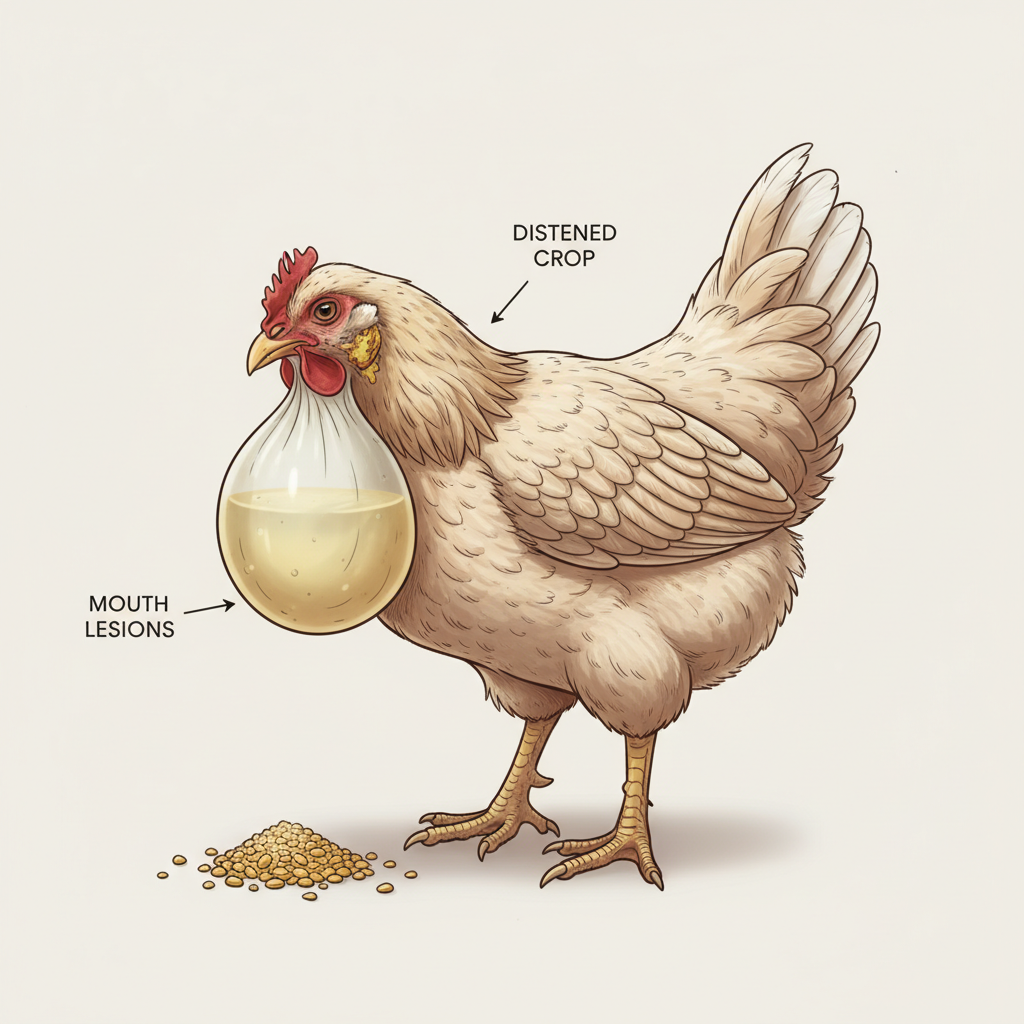
Mix of AI illustrations and anonymized real cases shared by community keepers. Visual severity varies by bird, age, and stage.
Symptoms
- Squishy or water filled crop
- Foul or sour breath
- Lethargic / not moving
- Not eating
- Yellow mouth lesions
Treatment
Withhold food for 12 hours, water still available. Gently massage the crop several times a day. Offer plain unsweetened yogurt or a poultry probiotic. Vet may prescribe nystatin. Never tip a bird upside down to empty the crop, they can aspirate and die.
Prevention
Avoid long stretches of bread or sugary treats. Throw out moldy or wet feed. Give probiotics after any antibiotic course. Make sure grit is available so feed digests properly.
Typical recovery
3 to 10 days with prompt care.
Treating sour crop without making it worse
Sour crop is a yeast overgrowth in the crop, most often Candida. It usually starts when food sits in the crop too long, ferments and lets yeast take over. The crop feels soft and squishy and stays full overnight, and the bird's breath smells sour or like bread dough. It can follow antibiotics, a slow crop, moldy feed or another illness that slows digestion.
Signs to watch for
- A crop that is still full and squishy in the morning.
- Sour, yeasty breath.
- Fluid coming from the beak when she bends down.
- Eating less, losing weight, sitting fluffed up.
What to do
- Check the crop before she eats in the morning to confirm it.
- Separate her and take away food for a short time, keeping water available.
- Massage the crop gently downward a few times a day.
- When the crop starts to empty, offer small amounts of soft, easy food like wet layer feed or scrambled egg.
- Throw out moldy or old feed and clean feeders and waterers.
- Call a vet for an antifungal treatment if it does not clear quickly.
About emptying the crop by tipping her
Online advice often says to hold the hen upside down and push the fluid out. This carries a serious risk of her breathing in the fluid, which can kill her. Only do it if a vet has shown you how and thinks it is needed.
How to tell this apart from look-alikes
A hard or doughy crop is impacted crop, a blockage rather than a yeast problem. They can overlap, since a blockage can turn sour. A crop that stays full while the hen otherwise seems healthy can also mean a problem further down the gut, like a stuck egg or a tumor. The sour crop symptom page covers quick checks.
When to call a vet
Call an avian or poultry vet if the crop stays full after a day of care, if she is weak, losing weight, or bringing up fluid, or if it keeps coming back. A vet can prescribe an antifungal and look for what caused the slow crop in the first place.
Home remedies
Apple cider vinegar, probiotics and yogurt are often suggested. They may support gut health, but they do not cure a yeast infection on their own. Do not rely on them while the bird gets worse.
Prevention
- Store feed dry and use it within a few weeks.
- Never feed moldy bread, scraps or feed.
- Keep run grass short so birds do not swallow long strands.
- Keep waterers clean, since slimy water breeds yeast and bacteria.
Eggs and the rest of the flock
Sour crop is not contagious, but if moldy feed caused it, other birds may be at risk. Check their crops in the morning too. If a vet prescribes an antifungal, check the product label or ask the vet about the egg withdrawal period. The first aid kit page has supplies worth keeping.
Common questions about sour crop
What does sour crop smell like?
Sour, yeasty, a bit like spoiled bread dough.
Can sour crop kill a chicken?
Yes, if it is not treated. Birds can starve or inhale fluid.
How long does sour crop take to clear?
Mild cases can clear in a few days. Others need a vet and longer treatment.
