

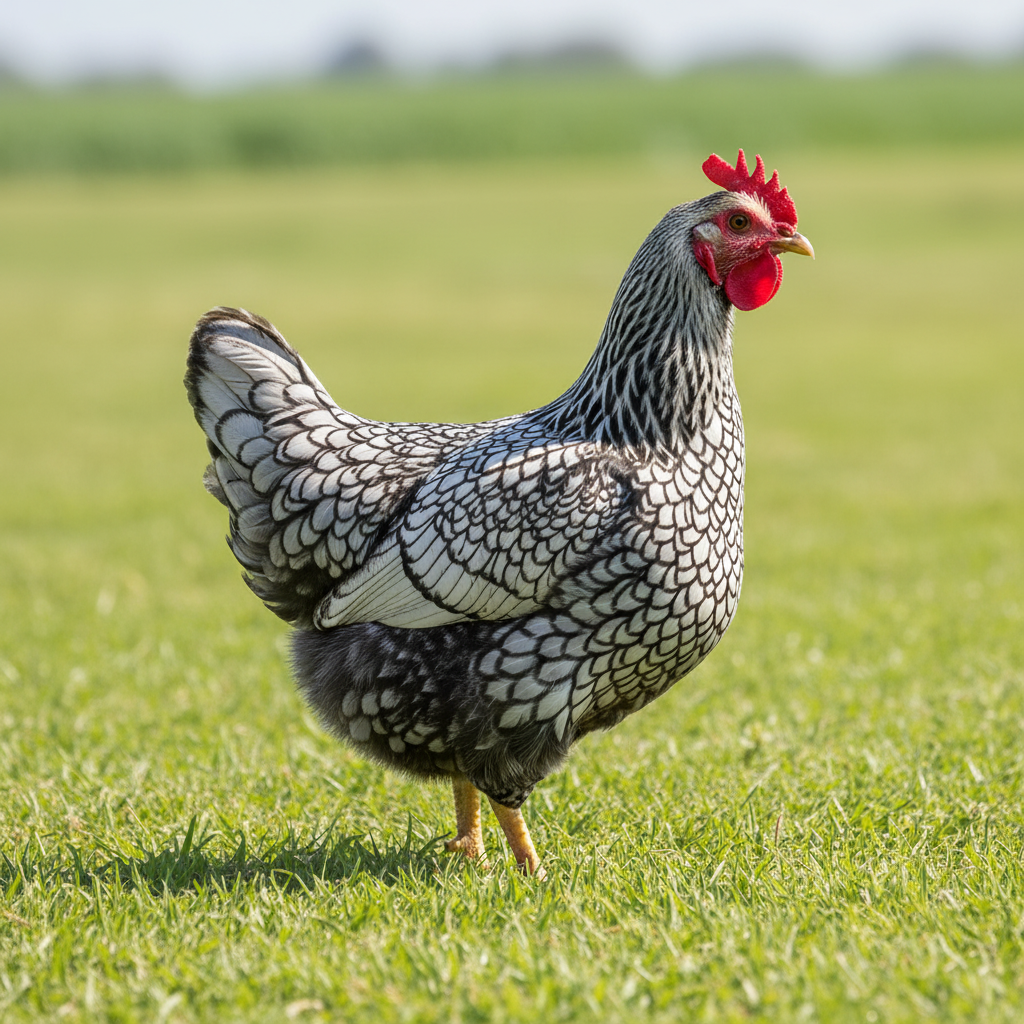
Wyandotte
Stunning laced feathers and rose comb.
Is the Wyandotte right for you? Take the Breed Matcher →About the Wyandotte
Wyandottes are known for their beautiful, laced feather patterns and distinctive rose combs. They are friendly, social birds that adapt well to a variety of environments, making them excellent companions for backyard keepers. Their calm disposition allows them to thrive in mixed flocks, and their dual-purpose nature means they are valued for both meat and egg production.
History
The Wyandotte breed originated in the United States in the late 19th century, named after the Wyandot Native American tribe. Developed primarily in New York, it quickly gained popularity at poultry shows and among farmers across the country.
Care tips
Wyandottes are hardy birds that tolerate colder climates well, making them suitable for year-round outdoor living. They require ample space to roam and forage, as they enjoy being active. Keep an eye out for broodiness, as some hens may frequently go broody and become more protective over their nests.
Color varieties
Fun facts
- Wyandottes come in several color varieties, including silver laced and gold laced.
- They were first recognized by the APA in 1883, showcasing their long-standing popularity.
- Wyandottes are known for their excellent egg-laying capabilities, producing brown eggs consistently.
- The breed’s rose comb helps them handle cold weather better than other comb types.
Why so many keepers love Wyandottes
The Wyandotte was developed in New York state in the 1870s and accepted by the American Poultry Association in 1883 in the silver laced color. It was named after the Wyandot people. Since then many colors have been added, including golden laced, blue laced red, silver penciled, partridge, Columbian, white, black and buff. The laced varieties, with dark borders around each feather, are the ones most people picture.
Day to day
Wyandottes are solid, medium-heavy birds with a rounded shape. Most are calm and tolerant, though many are not lap chickens. They are often confident and can be bossy in a mixed flock. Hens hold their own at the feeder. Roosters are usually decent, but like any heavy breed you should pick the calmest.
The rose comb advantage
Wyandottes have a rose comb, which sits low and flat on the head. That makes them much less prone to frostbite than single-combed breeds, which is a big reason they are a favorite in cold places. Add thick feathers and a heavy body, and you get one of the best cold-weather breeds. They do less well in heat. Give them shade, airflow and plenty of water in summer.
Laying pattern
Wyandottes lay a good number of light to medium brown eggs. They are known for laying fairly well through winter, better than many breeds. They start around five to six months. Some hens go broody. Like other heritage breeds they lay best in their first two to three years.
Space and coop
Standard large fowl space works. They are not big fliers, so ordinary fencing usually holds them. They forage well but are happy in a run. Their fluffy rear feathers can collect droppings, so check vents now and then, and look for mites, which like dense feathering.
Hatchery vs show birds
Hatchery Wyandottes are often smaller and their lacing is less crisp. Show-quality birds are rounder, with clean, even lacing. Hatchery birds are usually better layers. If you want birds for the look, a breeder is worth it.
How they compare
Wyandottes are often compared with Orpingtons. Orpingtons are larger, softer and broodier, while Wyandottes have the cold-friendly rose comb and are often a bit more assertive. See Wyandotte vs Orpington. For specific colors, the Golden Laced Wyandotte and Black Laced Red Wyandotte have their own pages. Wyandottes also show up on our list of breeds for cold climates.
Where to get them
Silver laced, golden laced, blue laced red and Columbian Wyandottes are sold by most US hatcheries and farm stores. Bantam Wyandottes are common too. Rarer colors and show lines come from breeders.
Who they suit
Wyandottes are a great fit if you live somewhere cold, want a pretty, productive bird, and do not mind a hen with a bit of attitude. They are a decent choice for families, but gentler breeds like Orpingtons are better if kids want a bird to carry.
Common questions about Wyandottes
Are Wyandottes good layers?
Yes. They are steady layers of brown eggs and often keep laying through winter.
Are Wyandottes aggressive?
They can be bossy with other chickens, but most are not aggressive toward people.
Do Wyandottes handle cold well?
Very well. Their rose comb resists frostbite and their thick feathers keep them warm.
