

About the Sumatra
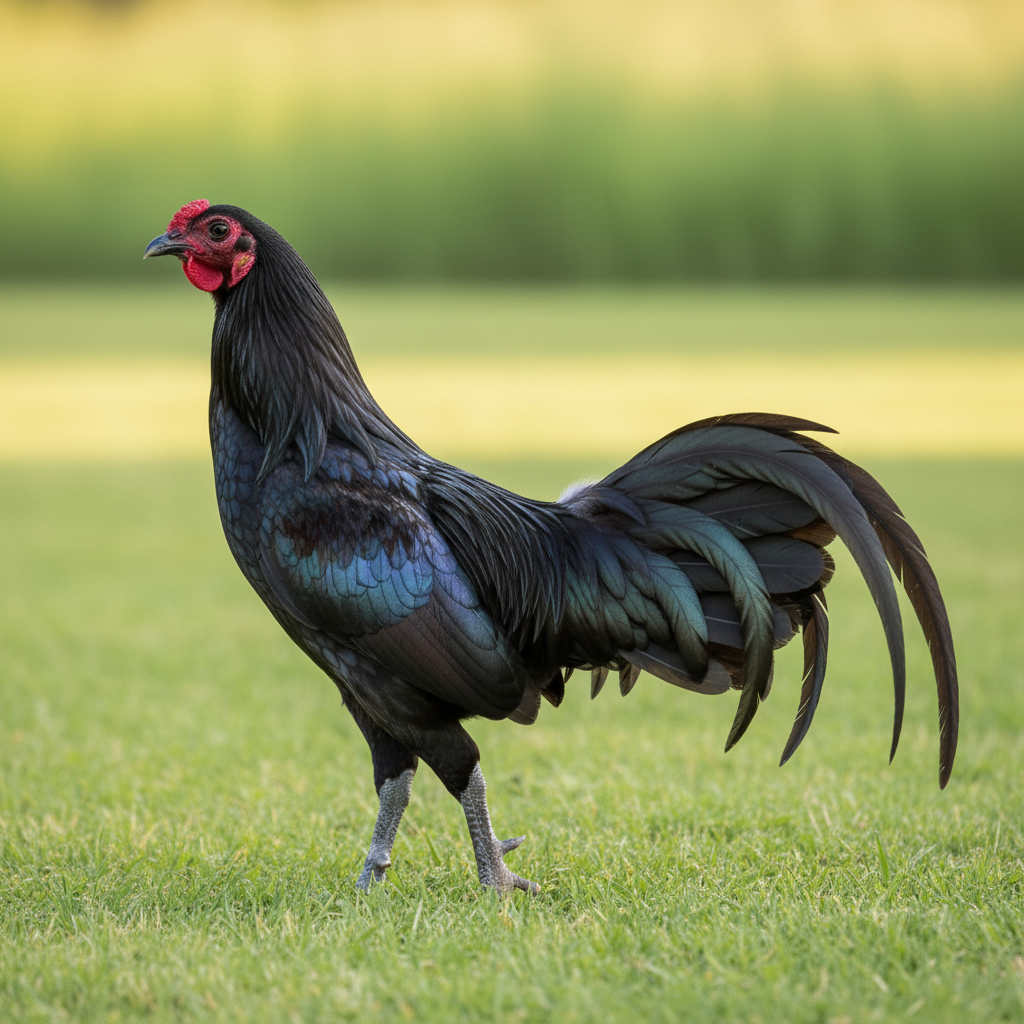
Sumatra chickens have a distinctive appearance with long, flowing tails and a graceful, upright stance. Their feathers are typically glossy black with an iridescent green sheen. Known for their striking beauty, these birds are also agile flyers, which adds to their allure. Their temperament can be quite active and independent, making them fascinating companions.
History
The Sumatra breed originated in Indonesia, specifically on the island of Sumatra. Developed for their beauty and agility, these birds have been kept for centuries, becoming popular globally as ornamental fowl in the 19th century. They were brought to Europe and America, where their unique characteristics were further appreciated.
Care tips
Sumatra chickens require ample space to roam as they are active and enjoy flying. They are quite hardy, but they may need extra care during cold seasons due to their origin in tropical climates. Additionally, they can exhibit broody behavior, so be prepared to manage this if you are interested in egg production.
Color varieties
Fun facts
- Sumatra chickens are known for their impressive flight skills, making them agile around the yard.
- The breed has been admired for its vibrant, iridescent plumage that catches the light beautifully.
- Sumatras often have a calm demeanor, but they can be independent and enjoy exploring.
- They are a rare breed with dedicated enthusiasts who appreciate their ornamental value.
Living with Sumatras
The Sumatra comes from Indonesia and reached the US and Europe in the 1800s. It is a striking bird, glossy black with a green sheen, a long flowing tail on the roosters, a small pea comb and a dark, purplish face. Some roosters grow more than one spur on each leg. Blue and white varieties also exist.
Day to day
Sumatras are active, alert and often flighty. They are strong fliers, so a covered run or tall fence is a must. They are excellent foragers and do well on free range. Many are wary of people, though some tame with handling.
Roosters
Sumatras have game bird roots, and roosters can be aggressive with other males. Keep one per flock or give them a lot of space. They are usually not aggressive with people.
Eggs and broodiness
Hens lay white or cream eggs at a modest rate. They go broody and make good mothers.
Tail care
The long tails on roosters need clean, dry bedding and high perches to stay in good shape.
Climate
They are hardy. The small pea comb resists frostbite. In heat, give shade, since black birds soak up sun.
How they compare
The Ayam Cemani is another all-black Indonesian breed, but it has black skin and organs. The Sumatra has normal skin and is mostly kept for its looks and hardiness.
Rarity
Sumatras are uncommon. The Livestock Conservancy has counted Sumatras among its priority breeds. A few hatcheries sell them.
Who they suit
Sumatras suit keepers with space who like a wild-looking bird and want good broody hens. They are less suited to small backyards or anyone who needs birds that stay put behind a low fence.
Common questions about Sumatras
Can Sumatras fly?
Yes, very well. Plan on a covered run.
Are Sumatra hens good mothers?
Yes. They are good broodies.
Are Sumatras aggressive?
Roosters can fight other males, but they are usually not aggressive with people.
