

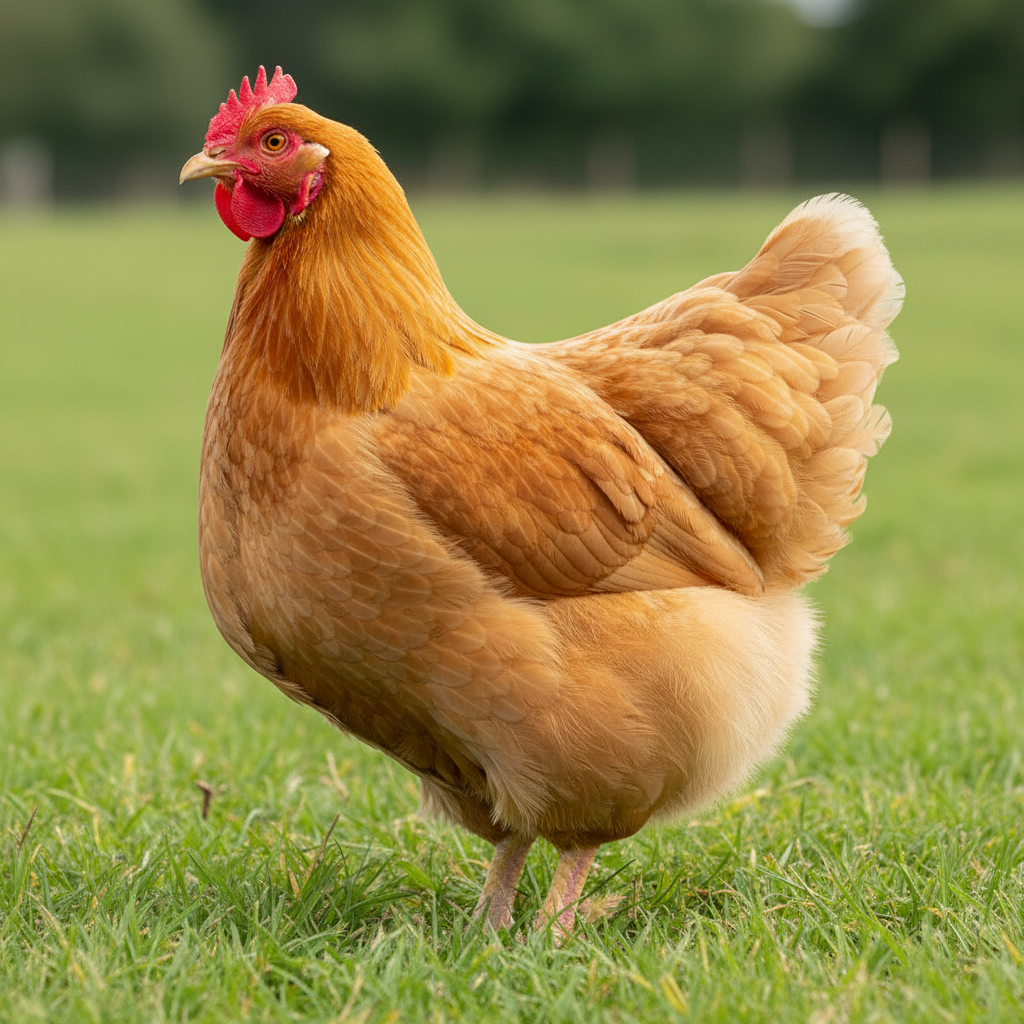
Orpington
Also known as Buff Orpington
Also known as: Buff Orpington
Is the Orpington right for you? Take the Breed Matcher →About the Orpington
Orpingtons are large, robust birds known for their soft, fluffy feathers and friendly demeanor. They come in various colors, the most popular being the Buff, which features a warm golden hue. Their calm and sociable temperament makes them ideal for backyard flocks and families. These birds are also good layers, providing medium to large brown eggs.
History
The Orpington breed originated in the late 19th century in Kent, England, developed by William Cook. He sought to create a dual-purpose chicken that excelled in both meat production and egg-laying. The breed quickly gained popularity and spread to many countries, becoming a favorite among poultry enthusiasts.
Care tips
Orpingtons are hardy birds, well-suited for various climates due to their dense feathering. They thrive in spacious coops and pens, as they enjoy a good amount of room to roam. While they are typically calm, some hens can be broody, making them excellent mothers if you desire to raise chicks. Ensure access to shade and fresh water in warmer months.
Color varieties
Fun facts
- Orpingtons were first developed in the 1880s in England.
- They are known for their excellent foraging abilities.
- Buff Orpingtons are often seen in poultry shows for their striking appearance.
- This breed became popular in the U.S. in the early 1900s.
What it is like to keep Orpingtons
Orpingtons were developed by William Cook in Orpington, Kent, in the late 1800s. The Black came first and the Buff a few years later, and the Buff is still the one most people picture. They were meant to be a useful dual-purpose farm bird, and in backyard flocks today they are best known for being big, soft and friendly.
Most Orpingtons are calm and easy to handle. Hens will often follow you around the yard and many tolerate being picked up. That gentle nature makes them a regular pick for families. The flip side is that they are rarely the boss in a mixed flock, and pushy breeds may bully them at the feeder.
Broodiness and laying
Expect a fair number of light brown eggs. Orpingtons are not top production layers, but they lay steadily, and many keep going reasonably well through winter. The big factor is broodiness. Lots of Orpington hens go broody, sometimes more than once a year, and a broody hen stops laying. If you want to hatch chicks, that is great. If you just want eggs, be ready to break a broody now and then. Like other heavy breeds, they lay best in their first two years.
Watching weight and fluff
All that fluff hides a lot. Orpingtons put on fat easily, so go easy on scratch and treats. Fluffy vent feathers can collect droppings, which can lead to messy rear ends and attract flies in summer. Many keepers trim around the vent. That thick feathering is also a good hiding spot for lice and mites, so part the feathers and look during your regular checks.
Climate and space
Orpingtons are very cold-hardy thanks to their size and dense feathers, though roosters' single combs can still get frostbite. Heat is harder on them. In hot summers they need deep shade, airflow and cool water, and you should watch for panting and spread wings, signs of heat stress. They are not great fliers, so normal fencing holds them. Give them a bit more room than light breeds, since they are big bodied.
English vs hatchery Orpingtons
You will see English Orpingtons and hatchery or American Orpingtons. English lines are usually bigger, broader and much fluffier, and often lay fewer eggs. Hatchery birds are smaller and leaner but tend to lay better. Neither is wrong, it depends on what you want.
Colors and how they compare
Buff, black, blue, splash and white are the common colors, with lavender, jubilee and chocolate from specialty breeders. The Lavender Orpington has its own page. Against the Australorp, which was developed from Black Orpingtons, the Orpington is fluffier and broodier while the Australorp usually lays more. The Buff Orpington vs Australorp comparison covers it. Against the Wyandotte, see Wyandotte vs Orpington.
Where to get them
Buff Orpingtons are sold by almost every hatchery and farm store in spring. Black, blue and splash are common too. For English type or rare colors, go to breeders, many of whom show their birds.
Common questions about Orpingtons
Are Orpingtons good for beginners?
Yes. They are calm, hardy and forgiving, which is why they are a common first breed.
Do Orpingtons go broody a lot?
Many do. If you do not want chicks, collect eggs daily and be ready to break broody hens.
How many eggs do Orpingtons lay?
A fair amount, usually a few eggs a week from a healthy young hen. Hatchery lines generally lay more than English show lines.
