

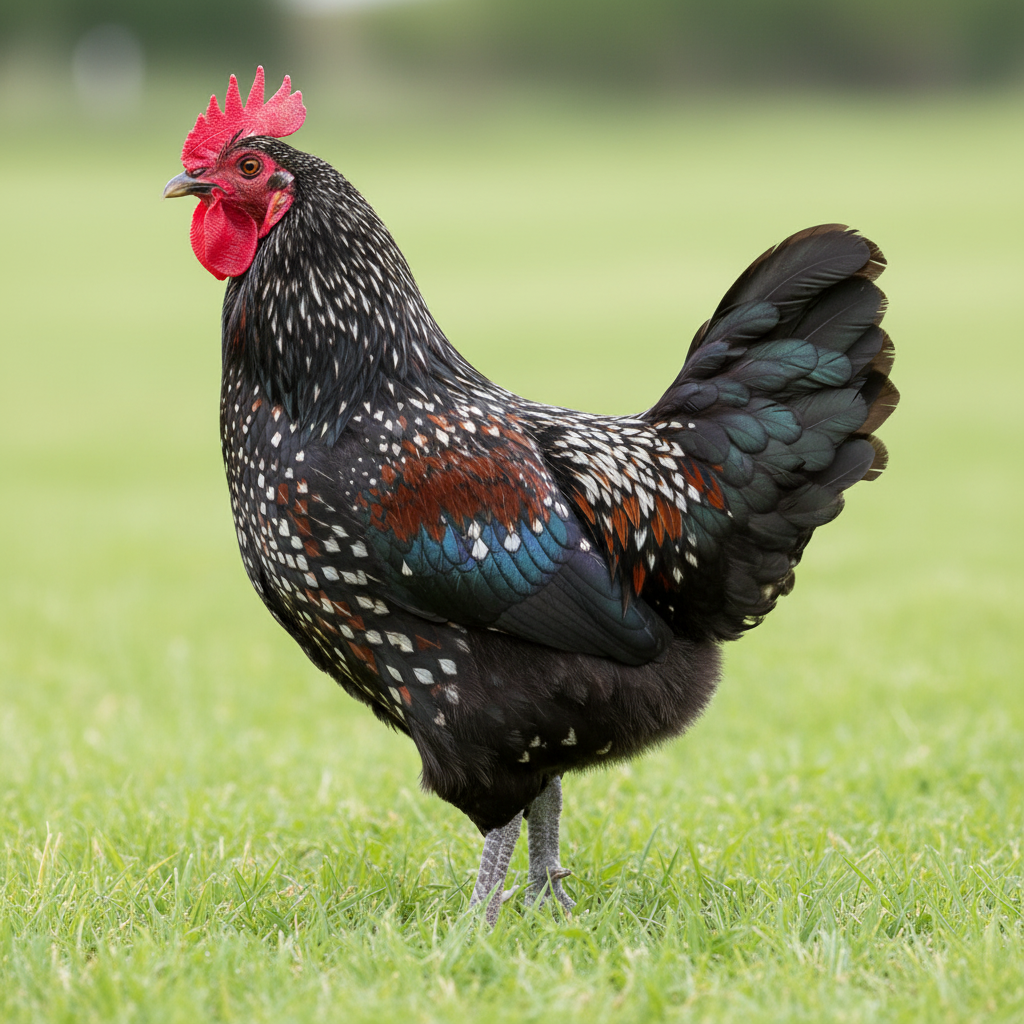
About the Java
The Java is a stout, hardy bird characterized by its black feathering with greenish sheen, distinctive white face, and yellow legs. Known for its calm and friendly temperament, it is excellent for backyard settings. Java chickens are notable for their ability to adapt well to varied environments and are appreciated for both meat and egg production due to their dual-purpose nature.
History
Developed in the United States in the mid-19th century, the Java is one of the oldest American chicken breeds. Its ancestry is believed to trace back to various Asian birds brought to American shores. Once popular, the breed faced decline in the early 20th century but has been preserved by dedicated enthusiasts.
Care tips
Java chickens are hardy and can withstand colder climates, making them suitable for a variety of environments. They are generally broody, so expect them to sit on eggs if given the chance. Ensure they have enough space to roam and forage as they thrive in free-range conditions and enjoy social interaction.
Color varieties
Fun facts
- Java chickens were first developed around the 1830s.
- They can lay about 150-200 brown eggs per year.
- Javas have a gentle nature, making them friendly companions.
- They were recognized by the American Poultry Association in 1883.
Living with Java chickens
The Java is one of the oldest American chicken breeds, often called the second oldest after the Dominique. Its exact origin is unclear, but it was well established in the US by the mid 1800s. The Java helped create other American breeds, including the Plymouth Rock and the Jersey Giant. Black and Mottled are the classic colors, with White also recognized.
Day to day
Javas are large, long-bodied birds with a calm, steady temperament. They are excellent foragers and were built to find food on free range farms. Most keepers find them friendly enough, though not as cuddly as an Orpington. Roosters are usually reasonable.
Laying through the year
Hens lay brown eggs at a good rate for a heritage breed. They are known for laying fairly well in winter. Some hens go broody and make good mothers. They mature slower than production breeds.
Space and climate
They are big birds, so give them a bit more room. They handle cold well, though single combs on roosters can still get frostbite. Black Javas need shade in hot summers, since dark feathers soak up heat.
Look for the green sheen
Good Black Javas have a beetle-green sheen in the sun. Mottled Javas are black with white tips, and like other mottled birds they often get whiter with each molt.
Rarity and where to buy
Javas nearly disappeared in the 1900s and have appeared on the Livestock Conservancy priority list. A few hatcheries sell them, and breeders who focus on heritage American breeds are the best source. The Dominique is a good companion breed if you want to keep two of the oldest American breeds together.
Common questions about Java chickens
Are Java chickens good layers?
Yes, for a heritage breed. They lay brown eggs and hold up fairly well in winter.
Are Javas good meat birds?
They are large and were used as dual-purpose birds, but they grow slowly.
Are Java chickens rare?
Yes. They are uncommon, but a few hatcheries and breeders keep them.
