

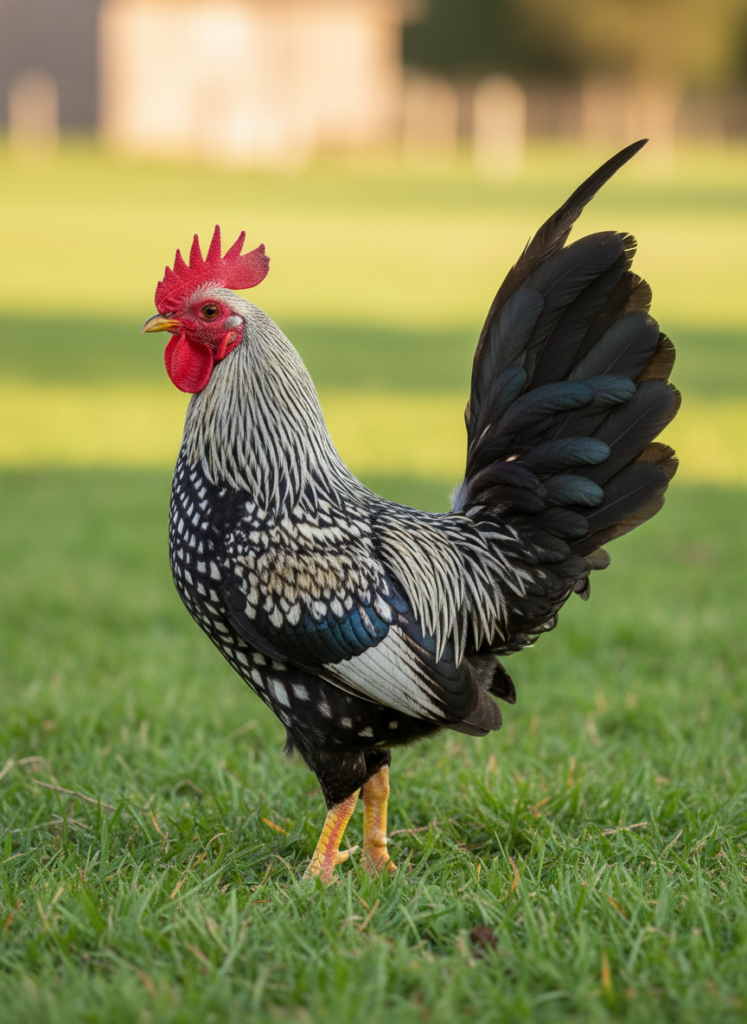
Japanese Bantam
The Japanese Bantam is a unique ornamental breed known for its distinctive short stature and personality.
Is the Japanese Bantam right for you? Take the Breed Matcher →About the Japanese Bantam
Japanese Bantams are small, striking birds with a compact body and short legs. They have a distinctive upright posture and a bold, curious temperament. Their feathering is often glossy with a variety of colors and patterns, making them an attractive choice for ornamental purposes.
History
The Japanese Bantam’s exact origins are unclear, but they have been bred in Japan for centuries. Their popularity spread internationally in the 19th century, leading to various color and feather pattern variations being developed.
Care tips
These birds are hardy and adapt well to smaller spaces, making them suitable for backyard settings. They are known to be broody and may require nesting boxes to accommodate their natural instincts. Regular social interaction is important to keep them friendly and engage their curious nature.
Color varieties
Fun facts
- Japanese Bantams often have an unusually high tail carriage.
- They are among the oldest known ornamental breeds in the world.
- Their unique short legs give them a distinctive, comical appearance.
- They enjoy foraging and can be quite entertaining to watch.
What keeping Japanese Bantams is really like
Japanese Bantams, also called Chabo, are true bantams from Japan, meaning there is no large version. They have been kept as ornamental birds for centuries. You notice them right away for their very short legs, a large upright tail that rises above the head, and a big single comb. Common colors include black-tailed white, black-tailed buff, black, white, gray and mottled, and the breed comes in plain, frizzled and silkie-feathered types.
The short leg gene
The short legs come from a gene that is lethal in a double dose. When two short-legged birds are bred, about a quarter of the embryos die in the shell. That is why hatch rates for this breed look poor even with good eggs and a good incubator. Some chicks also hatch with normal legs. Breeders often pair short to long legged birds to help with this.
Day to day
Japanese Bantams are calm and friendly, easy to tame, and good with gentle kids. They are poor fliers and stay close to the ground. Because of that, their wings and tail drag in mud and wet grass. Give them a dry, covered run and clean bedding. They do not dig or range far, which suits small gardens.
Eggs and broodiness
Hens lay small cream or tinted eggs. They go broody often and make attentive mothers, though they can only cover a few eggs.
Climate
They do well in warm weather with shade. Cold is harder. They are small, they sit low on cold ground, and their combs are large for their size, so frostbite is a real risk. In cold areas, give them a draft-free coop with deep dry bedding.
Colors with their own pages
See the Black Tailed Buff and Mottled Japanese Bantam for details on individual colors.
Common questions about Japanese Bantams
Why do so many Japanese Bantam eggs fail to hatch?
The short leg gene is lethal in a double dose, so a share of eggs from two short-legged parents will not hatch.
Are Japanese Bantams good pets?
Yes. They are small, calm and easy to tame.
Do Japanese Bantams need heat in winter?
Not usually, but they need a dry, draft-free coop and close watch on their combs in cold weather.
