

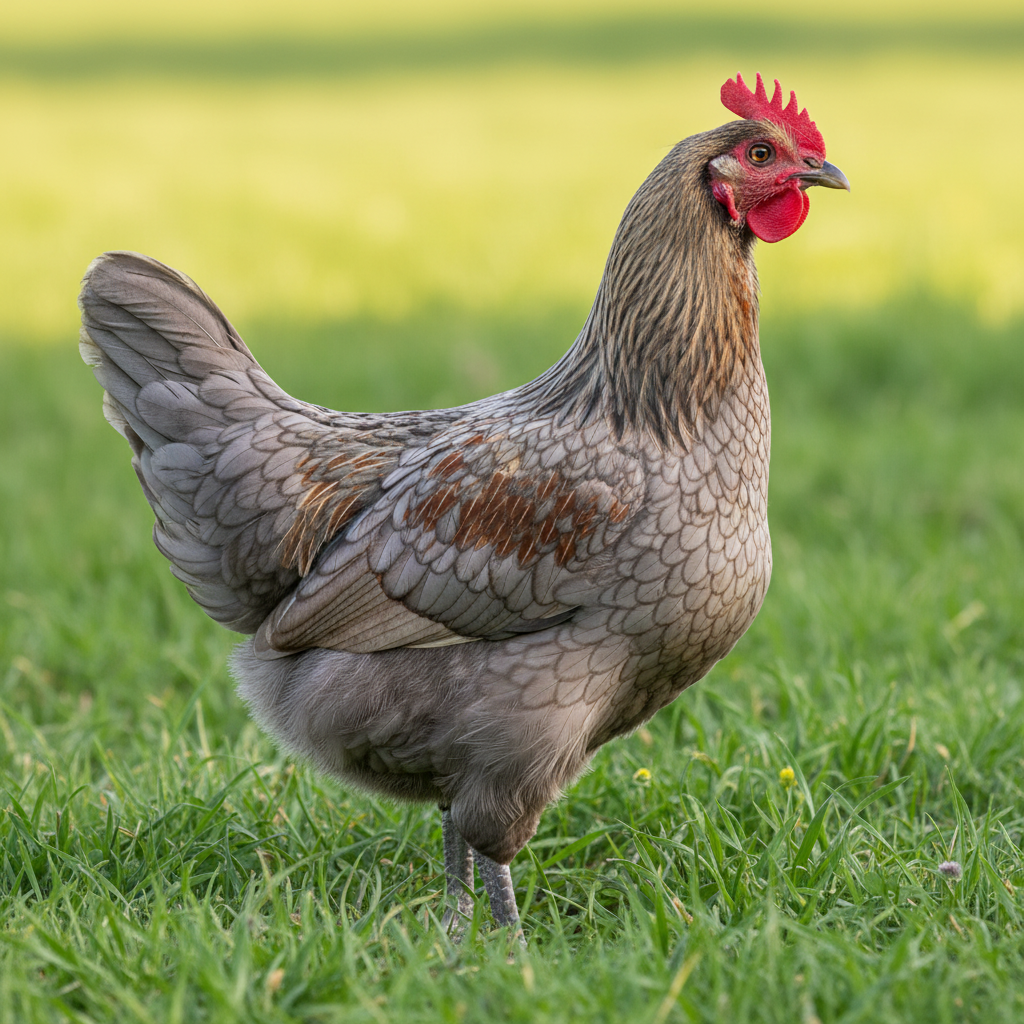
Isbar
Isbar chickens are unique layers known for their blue-green eggs and friendly temperament.
Is the Isbar right for you? Take the Breed Matcher →About the Isbar
Isbars are medium-sized birds with striking plumage ranging from mottled dark green to black. They have friendly and inquisitive temperaments, making them excellent companions in the backyard. Known for their unique blue-green eggs, Isbars are a great addition to any flock due to their hardy nature and ability to adapt to various environments.
History
The Isbar breed was developed in Sweden during the 1950s, created from crossing various breeds to produce a high-quality egg layer. It gained popularity for its unique egg color and resilient characteristics, and has since spread to backyard flocks beyond its homeland.
Care tips
Isbars are generally hardy and adapt well to different conditions. They do well in free-range environments, but space is important for their social nature. Regular health checks and a balanced diet are essential for maintaining their egg production.
Fun facts
- Isbars are recognized for their unique feathers that come in various shades.
- They are known for their calm demeanor and friendly interactions with humans.
- The breed is a result of careful breeding to enhance egg color and production.
- Isbars are also resistant to certain diseases, making them a hardy breed.
Isbar, Silverudd Blue and the name confusion
The Isbar is a Swedish breed developed in the mid 1900s by Martin Silverudd, a breeder who created several laying breeds in Sweden. Many sellers use Isbar and Silverudd Blue for the same bird, which is why both pages exist. If you are buying, the name alone does not tell you much. Ask what the birds look like and what color eggs the hens lay.
What most Isbars look like today
Most birds sold as Isbars in the US come in blue, black and splash. Blue to blue matings give a mix of all three, since blue does not breed true. They are medium-sized, fairly light-bodied birds with single combs.
Eggs
Isbars are known for green-tinted eggs, from light mint green to deeper shades depending on the hen. They are good layers for a non-production breed.
The bar in the name
The ending follows the same naming style as British autosexing breeds like the Rhodebar and the Legbar, where chicks can be sexed by color at hatch. Some older sources describe the Isbar as autosexing. The blue, black and splash birds sold today are generally not sexed this way, so do not count on it unless the seller confirms it.
Living with them
Keepers describe them as active and friendly. They forage well and are cold-hardy, though single combs can get frostbite in very cold weather. They are not common, and most come from small breeders.
Common questions about Isbars
Are Isbar and Silverudd Blue the same?
The names are commonly used for the same bird. Ask the seller to be sure.
What color eggs does an Isbar lay?
Green-tinted eggs, in shades from pale mint to deeper green.
Can you sex Isbar chicks at hatch?
Generally not. Wait for combs and feathers to tell hens from roosters.
