

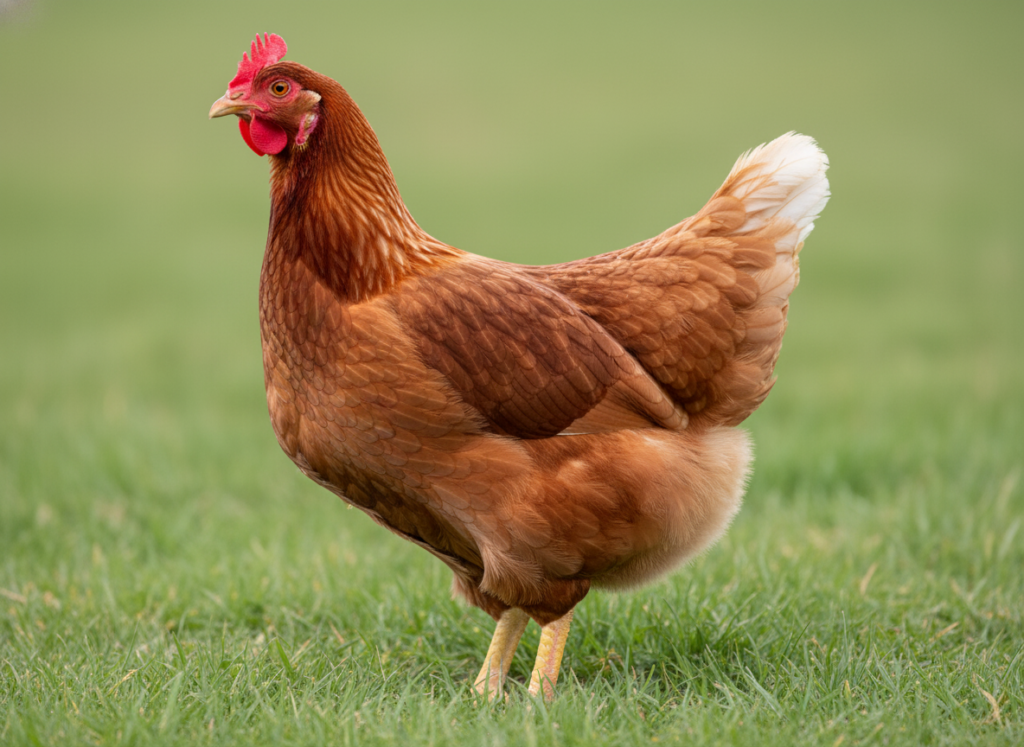
ISA Brown
ISA Browns are prolific egg layers with a friendly demeanor, ideal for backyard keepers.
Is the ISA Brown right for you? Take the Breed Matcher →About the ISA Brown
ISA Browns have a rich, warm plumage that typically ranges from dark brown to light reddish-brown. They are known for their calm and friendly temperament, making them excellent pets as well as productive layers. This breed is highly prolific, often laying over 300 eggs per year, which makes them particularly attractive for backyard flocks.
History
The ISA Brown breed originated in France in the late 20th century, developed specifically for high egg production. The breed quickly gained popularity for its hardiness and efficiency as it spread to various regions around the world, particularly in commercial egg production.
Care tips
ISA Browns adapt well to various housing conditions, though they thrive in spacious coops with good ventilation. Regular health checks and a balanced diet are important to maintain their egg-laying capabilities. They are generally non-aggressive and do well alongside other breeds, making them a harmonious addition to mixed flocks.
Color varieties
Fun facts
- ISA Browns can start laying eggs as early as 18 weeks old.
- They are known for their friendly and docile nature.
- This breed adapts well to confinement or free-range environments.
- ISA Browns are often used as a standard for commercial egg production.
What owning ISA Browns is really like
The ISA Brown is a commercial hybrid, not a breed. It was developed in France in the late 1970s, and the name comes from the company that created it. Today it belongs to the poultry genetics firm Hendrix Genetics. ISA Browns are sex-linked, so hens hatch red or brown and males hatch white or cream, which makes ordering pullets very reliable.
Huge first year, shorter career
ISA Browns are bred for one job. A healthy young hen lays brown eggs almost every day, often starting younger than heritage breeds. The catch is that this pace takes a lot out of the bird. Most slow down noticeably after their second year, and many keepers find they have a shorter life than heritage hens. Reproductive problems such as egg yolk peritonitis, tumors and internal laying are commonly reported in older hybrid layers. If a hen stands upright like a penguin, has a swollen belly or stops eating, call a vet.
Day to day
Most ISA Browns are very friendly and easy to handle, which surprises people who expect a factory bird. They are curious, follow you around, and do well with kids. They are rarely broody. Feed a good layer ration with oyster shell on the side, since all those eggs need calcium.
Space and climate
They are medium-sized and fine on standard space. They handle both cold and heat fairly well. Their single combs can get frostbite in deep cold.
How they compare
The Lohmann Brown and Golden Comet are close equivalents from other companies. See the ISA Brown vs Golden Comet comparison for how they line up.
Common questions about ISA Browns
How long do ISA Browns lay?
They lay heavily for about two years, then production drops. Many keep laying a little after that.
Are ISA Browns good for beginners?
Yes, for egg production and friendliness. Just know they tend to have shorter lives than heritage breeds.
Can you breed ISA Browns?
You can hatch their eggs, but the chicks will not be ISA Browns or sex-linked in the same way.
