

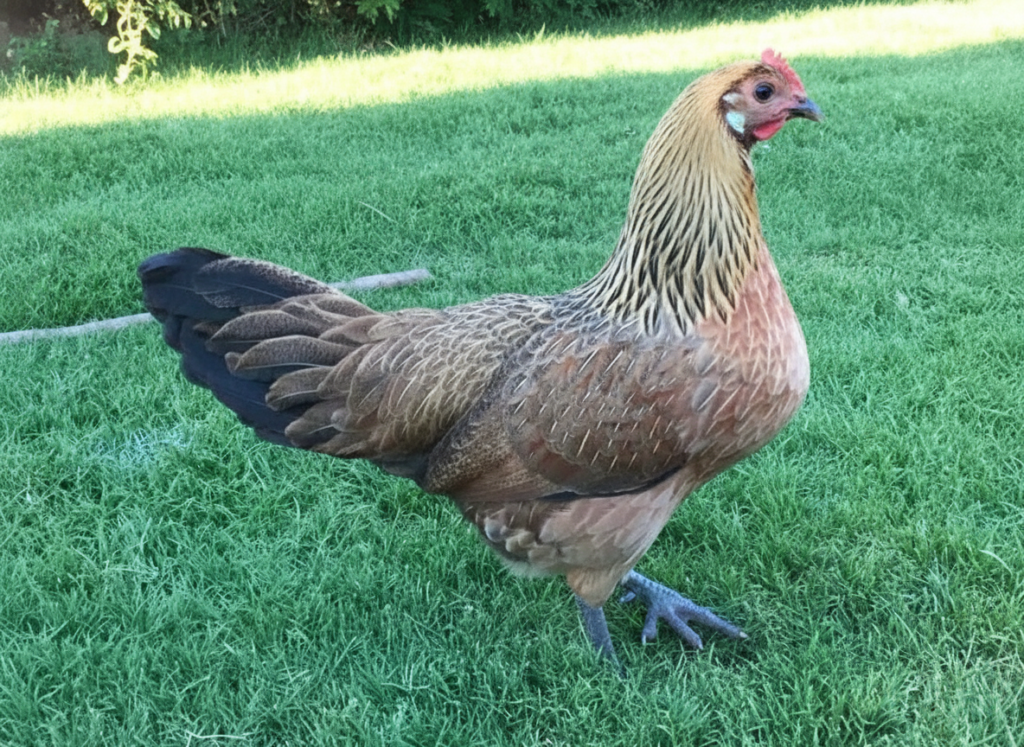
Golden Duckwing Phoenix Standard Chicken
The Golden Duckwing Phoenix is an ornamental breed known for its striking feather patterns and graceful appearance.
Is the Golden Duckwing Phoenix Standard Chicken right for you? Take the Breed Matcher →About the Golden Duckwing Phoenix Standard Chicken
The Golden Duckwing Phoenix displays vibrant golden and black plumage with a long, flowing tail that distinguishes it. This breed is known for its calm temperament, making it suitable for both novice and experienced backyard keepers. Its elegant appearance and striking feather pattern contribute to its popularity among ornamental fowl enthusiasts. The Phoenix is characterized by its hardiness and adaptability to various environments.
History
The Phoenix breed originated in Japan, where it was valued for its beautiful and unique feathering. It was developed through selective breeding and has spread globally, becoming a favorite in ornamental poultry shows due to its distinct appearance and graceful stature.
Care tips
Phoenix chickens are relatively hardy, but they thrive in spacious environments where they can roam and display their natural behaviors. Regular handling is important to maintain their calm nature. Be aware that some individuals may exhibit broodiness, making them good candidates for hatching eggs if desired.
Color varieties
Fun facts
- The Phoenix breed is famous for its long tail feathers that can grow to impressive lengths.
- Despite their beauty, they are not focused on egg production, making them more of a show breed.
- The Golden Duckwing variety is especially prized for its striking coloration.
- Phoenix chickens are often featured in poultry shows and competitions.
The Golden Duckwing Phoenix
Golden Duckwing is one of the classic colors of the Phoenix, a long-tailed breed developed in Europe from Japanese long-tailed fowl. Roosters show golden to straw hackles and saddles, a black breast and a steely band across the wing that gives the "duckwing" name. Hens are much quieter in color, with gray to brown tones and a salmon breast. On a mature rooster, the long flowing tail makes the color even more striking.
How it relates to the Phoenix and Onagadori
The Phoenix descends from Japanese breeds like the Onagadori, which is famous for tails that can grow for years without a normal molt. Most Phoenix do molt their tails, and their tails are shorter than top Onagadori, but well-bred Phoenix roosters still grow very long tails.
Keeping long-tailed birds
- Use high perches so tails do not drag on the floor.
- Keep the coop and run clean and dry to protect tail feathers.
- Avoid crowding, since other birds may step on or pull tails.
- Give them room to range. They are active and fly well.
Hens lay small cream to tinted eggs in modest numbers and often go broody. Phoenix are generally alert and can be flighty, though some become quite tame. Their single combs need protection in hard winters.
Where to find them
Golden Duckwing is one of the easier Phoenix colors to find. Some hatcheries offer it, and long-tail breeders keep better lines. Silver duckwing and other colors are also kept.
Common questions about Golden Duckwing Phoenix
How long do Phoenix tails grow?
Long, often several feet in good lines, but length varies a lot between birds and lines.
Do Phoenix hens lay well?
Not really. They are not egg birds. Eggs are small and few.
What does duckwing mean?
It describes the colored band on the rooster's wing, which looks like the wing markings of a duck.
