

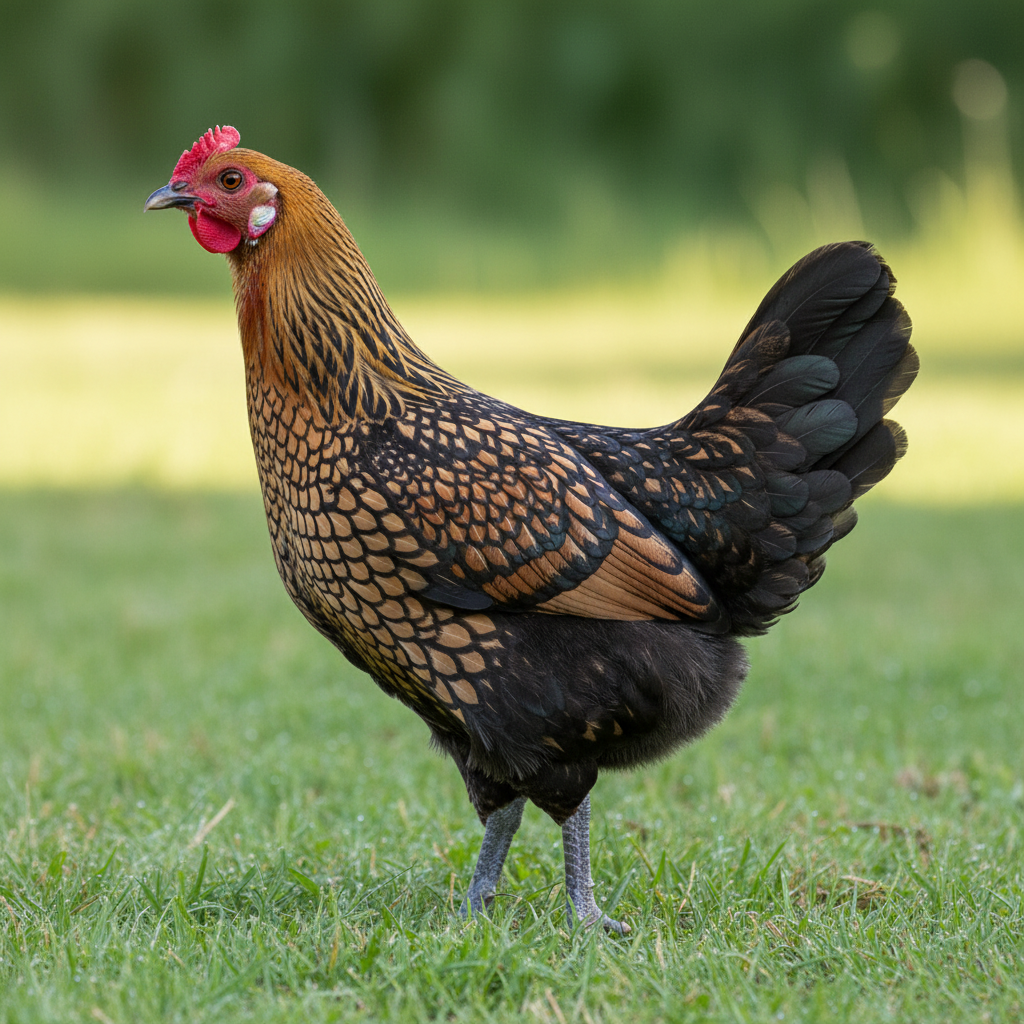
Campine
The Campine is a hardy breed known for its dual-purpose capabilities and friendly demeanor.
Is the Campine right for you? Take the Breed Matcher →About the Campine
Campines are known for their attractive plumage, typically featuring golden or silver feathers. They have a calm temperament, making them suitable for families and beginners. Their medium size allows them to adapt well to backyard environments, and they are often appreciated for their friendly nature and ease of handling. This breed is resilient and can thrive in various conditions, contributing to its popularity among backyard keepers.
History
Developed in the Campine region of Belgium, these chickens have roots dating back several centuries. They were bred primarily for their egg production and meat, gaining recognition throughout Europe for their hardiness and adaptability. Over time, Campines spread to other countries, where they were embraced by poultry enthusiasts.
Care tips
Campines are relatively low-maintenance and can adapt to different housing conditions, but they thrive in a spacious environment. They are good foragers and enjoy outdoor access, making them well-suited for free-range systems. Regular handling from a young age will help maintain their friendly temperament, and they often exhibit good broodiness.
Fun facts
- Campines can lay around 200 medium-sized brown eggs per year.
- They are known for their striking feather patterns, with both gold and silver varieties.
- This breed was a favorite among Belgian farmers for its dual-purpose utility.
- Campines have a calm demeanor, making them great companions for children.
What Campines are like to keep
The Campine is a Belgian breed from the Kempen region. It is light, active and lays white eggs. It has a solid colored hood over the head and neck with fine barring on the body, in silver or gold. The unusual trait is that Campine roosters are hen-feathered. They lack the long, pointed hackle and sickle feathers most roosters have, so they look much like the hens.
Campines are busy, alert and often flighty. They forage well, like to explore and are usually not interested in being held. They are generally not aggressive.
Campine vs Brakel
The Brakel is the closest relative. Brakel roosters are cock-feathered, with normal long hackles and sickles. That is the easiest way to tell the breeds apart. Brakels are also often described as a little heavier.
Who they suit
- Keepers who want white eggs from an active heritage breed.
- Free range or large covered runs.
- Fans of unusual breeds and rare bird conservation.
They are not a good match for small enclosed runs or for anyone wanting a calm pet.
Eggs and climate
Campines are fair to good layers of white eggs and rarely go broody. They lay best in warm months. In bitter cold the single comb is at risk of frostbite, and a dry, ventilated coop is the best defense. They handle heat well with shade.
Where to buy
Campines are rare in the US and are a conservation breed. Some breeders keep them, and a few hatcheries offer them. If you like the barred look but want something easier to find, the Hamburg is a similar light, active white egg layer.
Common questions about Campines
Why do Campine roosters look like hens?
Campine males are hen-feathered, so they lack long hackles and sickles.
Do Campines lay well?
They are fair to good layers of white eggs.
Are Campines friendly?
They are active and independent, not usually cuddly.
