

Belgian d’Anvers
Also known as Antwerp Belgian
Also known as: Antwerp Belgian
Is the Belgian d’Anvers right for you? Take the Breed Matcher →About the Belgian d’Anvers
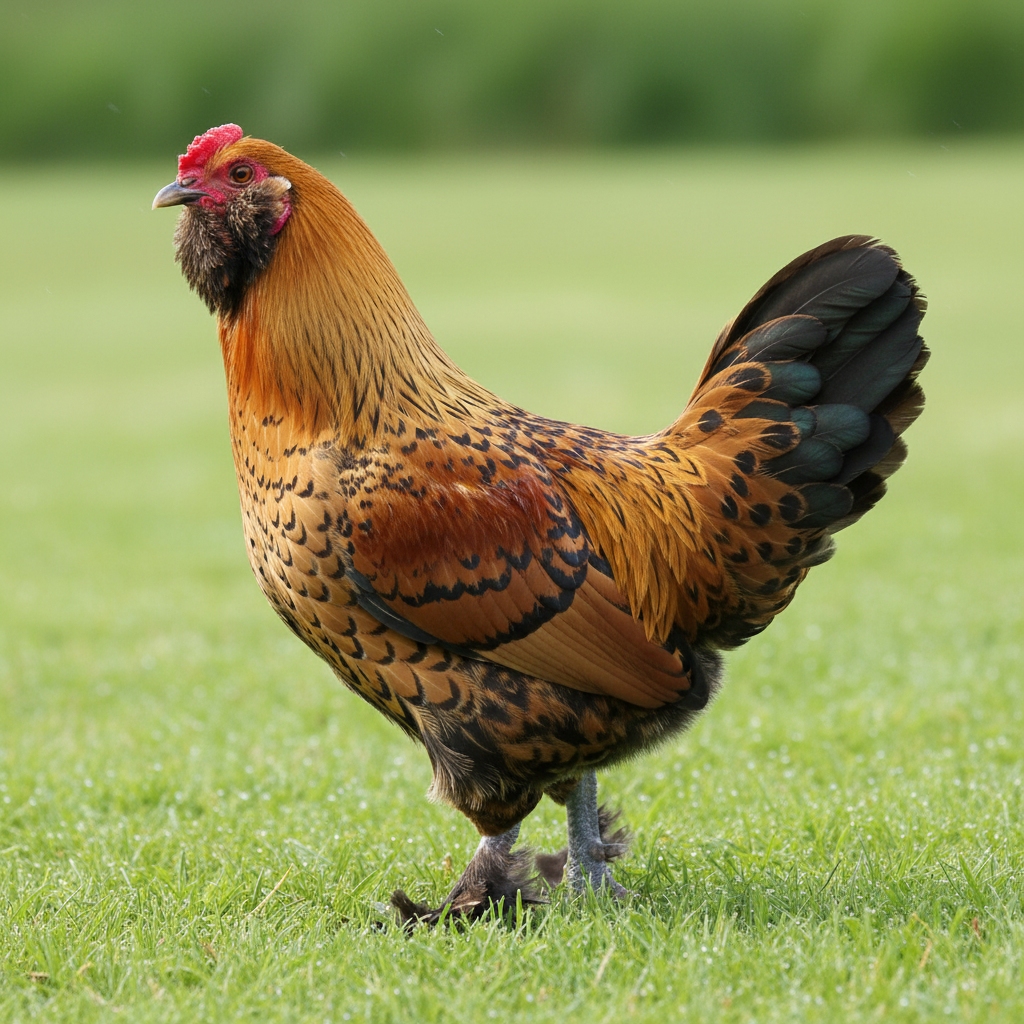
The Belgian d’Anvers is a striking true bantam characterized by its rose comb and prominent beard. This breed is compact, with a round body and attractive feathering, often seen in various colors. Known for its friendly and calm temperament, the d’Anvers is a popular choice among ornamental poultry fanciers.
History
Originating in Belgium, the Belgian d’Anvers was developed in the 19th century, particularly around Antwerp. It gained popularity across Europe for its charming appearance and personality, leading to a broader distribution among backyard keepers and exhibitions.
Care tips
Belgian d’Anvers chickens are relatively hardy, but they thrive in moderate climates and can be sensitive to extreme temperatures. They are good brooders, often taking to hatching eggs and nurturing chicks. A small space is suitable for them, but ensure they have enough room to move and stretch their wings.
Color varieties
Fun facts
- D’Anvers are known for their unique round bodies and short legs.
- They come in many colors, including black, blue, and cuckoo.
- These birds are sociable, often forming strong bonds with their keepers.
- They are recognized for their calm demeanor, making them great pets.
What the Belgian d'Anvers is like
The Belgian d'Anvers, also called the Antwerp Belgian or Barbu d'Anvers, is a true bantam from the Antwerp area of Belgium. There is no large version. It has a full beard and muffs, a small rose comb, clean legs and a proud, chest-out posture. Roosters in particular strut with their tails held high and their heads pulled back.
How it differs from the d'Uccle
The d'Anvers is often mixed up with the bearded d'Uccle. Both are small, bearded Belgian bantams, and both come in patterns like mille fleur and porcelain. The easy way to tell them apart is the feet and comb. The d'Uccle has heavily feathered feet and a single comb. The d'Anvers has clean legs and a rose comb. If you like the look of a Mille Fleur d'Uccle but hate muddy foot feathers, the d'Anvers is worth a look.
Daily care
- Small size means little space and feed, which suits small yards.
- Small cream to white eggs in modest numbers. People keep them for charm, not production.
- Beards get wet and dirty at open waterers. Cups or nipples keep faces cleaner.
- Check under the beard for mites and lice during health checks.
- They fly well for their size, so a covered run is useful.
The rose comb holds up well in cold weather. Like all bantams, they need protection from predators that larger hens might fend off.
Quail is the classic color, and many others exist. Most come from bantam breeders, and some hatcheries carry a few colors.
Common questions about Belgian d'Anvers
Is a d'Anvers the same as a d'Uccle?
No. The d'Anvers has clean legs and a rose comb. The d'Uccle has feathered feet and a single comb.
Are Belgian d'Anvers friendly?
Many are tame and easy to handle, though roosters can be bold for their size.
Do d'Anvers lay many eggs?
No. Hens give a modest number of small eggs.
