

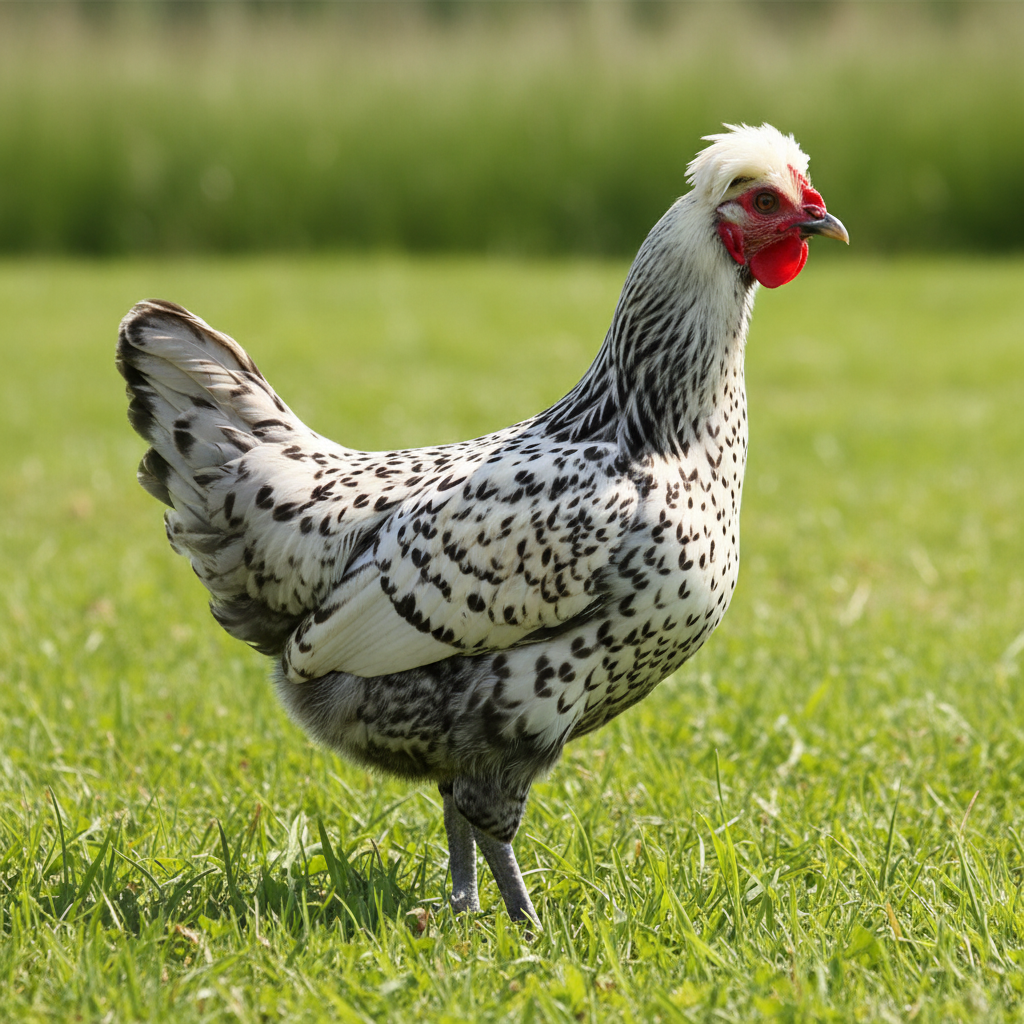
Appenzeller
Appenzellers are strikingly feathered chickens known for their unique rich history and delightful companionship.
Is the Appenzeller right for you? Take the Breed Matcher →About the Appenzeller
The Appenzeller breed is known for its striking appearance, featuring a small, upright crest on its head and a feathered body that comes in various color varieties. They are generally friendly and curious birds, making them an enjoyable addition to backyard flocks. Their distinctive color and crest set them apart from other breeds, and they are appreciated for their ornamental value and egg-laying capabilities.
History
Originating from the Appenzell region of Switzerland, the Appenzeller breed has been known since the 19th century. Initially developed for dual purposes as both a meat and egg layer, they began to gain popularity and spread to various parts of Europe. Their unique appearance and friendly temperament have helped them maintain interest among poultry enthusiasts.
Care tips
Appenzellers are hardy birds that adapt well to various climates but benefit from shelter during extreme weather. They can be somewhat broody, so providing nesting boxes can encourage egg laying and hatching behavior. Some may enjoy more space for foraging and free-ranging, making a larger coop ideal for this active breed.
Fun facts
- Appenzellers lay medium-sized white eggs, averaging around 200 per year.
- They are known for their friendly disposition and curious nature.
- The breed features a unique skinned head crest that distinguishes it from others.
- Appenzellers are often kept for ornamental purposes due to their beauty and charm.
What Appenzellers are like
Appenzellers are a Swiss breed from the Appenzell region. There are two forms. The Appenzeller Spitzhauben has a forward-pointing crest, often compared to a lace bonnet, and a small V-shaped comb. The Appenzeller Barthuhn is the bearded type, with a rose comb and no crest. Both are light, hardy birds that lay white eggs.
Day to day
- Very active foragers that enjoy space.
- Strong fliers. Expect them to roost high and clear low fences.
- Alert and often flighty. Some become tame with handling.
- White eggs, and fair to good laying for a heritage breed.
They come from a mountain region and are generally considered hardy in cold weather. The small comb of both types helps with frostbite. The Spitzhauben's crest should still be checked in wet, cold weather, since wet crests can freeze.
Who they suit
Appenzellers suit keepers with room for an active flock and an interest in rare breeds. They are not a good match for small runs without a roof, or for anyone who wants a slow, calm pet.
Crest care for Spitzhauben
The crest is smaller than a Polish crest, so vision problems are less common, but it still benefits from care. Check for mites and lice in the crest. Keep waterers from soaking the crest. Watch for other birds pulling crest feathers.
Where to find them
Spitzhauben are the more common type in the US, and a few hatcheries and breeders carry them. The bearded Barthuhn is much harder to find. If you like crested birds that lay white eggs but cannot find Appenzellers, the Houdan is another option, though it is heavier and calmer.
Common questions about Appenzellers
What is the difference between Spitzhauben and Barthuhn?
Spitzhauben have a forward crest and V comb. Barthuhn have a beard and rose comb.
Are Appenzellers cold-hardy?
Generally yes. Their small combs help.
Do Appenzellers fly?
Yes. They are strong fliers.
