

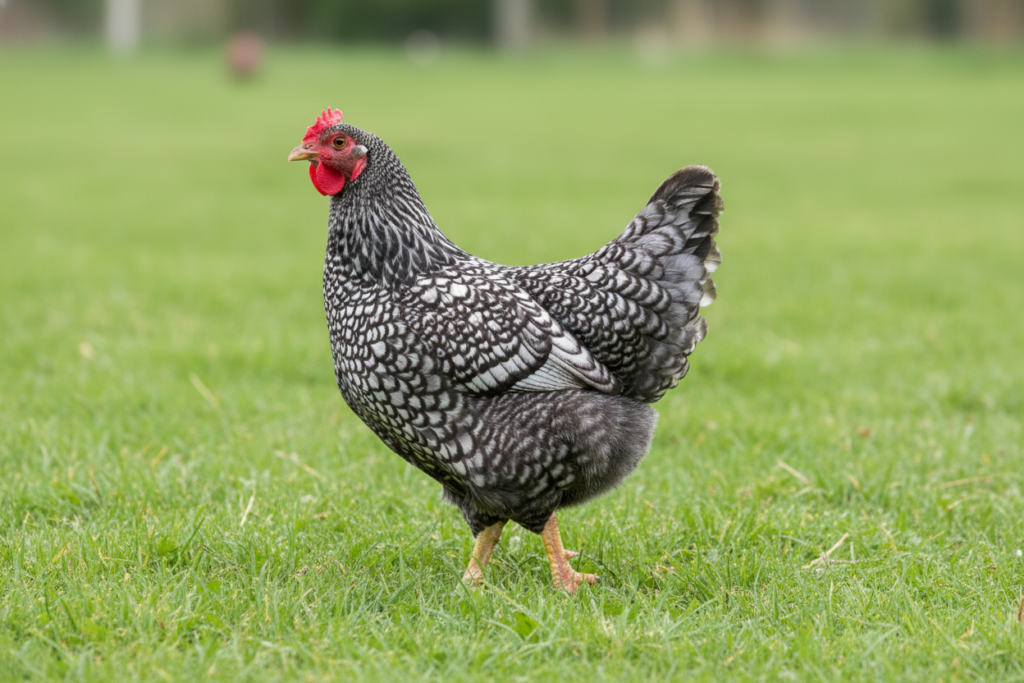
Amrock
The Amrock is a friendly and hardy breed known for its strikingly patterned feathers.
Is the Amrock right for you? Take the Breed Matcher →About the Amrock
Amrocks are known for their beautiful barred feather pattern, which provides a striking appearance. Their calm and friendly temperament makes them great companions in the backyard. These birds are good layers of brown eggs and are valued for both meat and egg production. The Amrock’s robust build and hardiness contribute to its popularity among chicken keepers.
History
The Amrock is a variant of the Barred Rock and was developed in the United States in the early 20th century. It gained popularity for its dual-purpose qualities and has since spread among backyard enthusiasts seeking reliable layers and good meat birds.
Care tips
Amrocks are generally hardy and adapt well to various climates. They benefit from adequate space to roam and forage, which keeps them physically fit and content. While they are not known for being broody, providing nesting boxes will encourage good laying behavior. Regular health checks and a balanced diet are essential for maintaining their well-being.
Color varieties
Fun facts
- Amrocks are great foragers and can help keep your yard free from pests.
- They are known for being friendly and sociable, making them great pets.
- Amrocks can adapt to different living conditions, from free-range to coops.
- The breed’s striking appearance makes them a favorite in backyard flocks.
What makes the Amrock different
The Amrock is a barred breed that descends from American Plymouth Rocks taken to Germany in the early 20th century. German breeders kept those birds as practical utility layers and did not follow later American show trends. The result is a bird that looks like a Barred Rock but is often described as closer to the older, working type.
Amrocks are recognized in Germany as their own breed. In the US, they are mostly found through breeders who have imported or kept Amrock lines.
Amrock vs Barred Rock
Side by side, the two look very similar. The Plymouth Rock in show lines is often bred for size and very crisp barring. Amrocks are often described as slightly lighter in build, with a focus on laying. Hatchery Barred Rocks vary a lot, so the gap between an Amrock and a hatchery Rock may be small. The barring pattern also makes them easy to confuse with the rose-combed Dominique, but Amrocks have single combs.
Day to day
- Calm, friendly and easy to handle.
- Steady layers of light brown to medium brown eggs.
- Active foragers, but also fine in a run.
- Hardy in cold weather, though the single comb can frostbite in deep freezes.
They fit standard large fowl space. Barring is sex-linked, and some keepers say Amrock chicks can be sexed by head spot size and down color, but this is not as reliable as a true autosexing breed or sex link.
Who they suit
Amrocks suit anyone who wants a dependable, friendly brown egg layer with a classic look. They are a good choice for families and first flocks.
Where to find them
Amrocks are uncommon in the US. A few breeders and specialty hatcheries sell them. If you mainly want the look and temperament, a Barred Rock is far easier to find.
Common questions about Amrocks
Is an Amrock just a Barred Rock?
They share ancestry, but Amrocks were bred separately in Germany as a utility line.
Are Amrocks good layers?
Yes. They are kept as productive brown egg layers.
Can you sex Amrock chicks at hatch?
Sometimes, by head spot and down color, but it is not fully reliable.
